On Thursday, 9 October, Sports Interactive released the fifth FM27 deep dive, and this time the conversation left the stadium and moved to the training ground. Two topics: training, which has been reorganised from top to bottom, and a new system called Tactical Effectiveness, which follows you through training, tactics and recruitment.
If you are one of those managers who hand training to the assistant on day one and never look at it again, this is the deep dive that tries to change your habits.
If you missed any of the first four deep dives, here they are, in order:
- FM27: new interface promises clearer, smoother navigation
- A deeper, more immersive football world
- FM27 arrives on 10 November with a more spectacular matchday
- FM27 brings Tactical Tweaks and a more realistic match engine
We read the official article, the FAQ that SI’s community team posted on Reddit, the images released with the announcement and the discussion that followed. We also checked the video clip SI shared on Instagram. Here is what matters.
What SI wanted to fix
In the FAQ, SI explains that it combined community feedback with its own internal reviews and came out with six goals for this part of the game:
- Make training more intuitive and less of a chore to manage.
- Cut the number of clicks needed to set up plans that repeat week after week.
- Have training prepare you for the next match and the next opponent, as real teams do.
- Keep individual player development in your hands.
- Create Tactical Effectiveness, a system that shows how much tactics weigh on team performance, on your management style and on recruitment.
- Through Tactical Complexity, make players react differently to the level of detail in your instructions, depending on their talent and profile.
Training with fewer clicks
The first change is about where things live. Training now sits in the main navigation bar, so you can reach it from any screen. Inside, SI reworked the interface to shorten the steps for the most common tasks, and you can choose which screen opens when you enter the section.
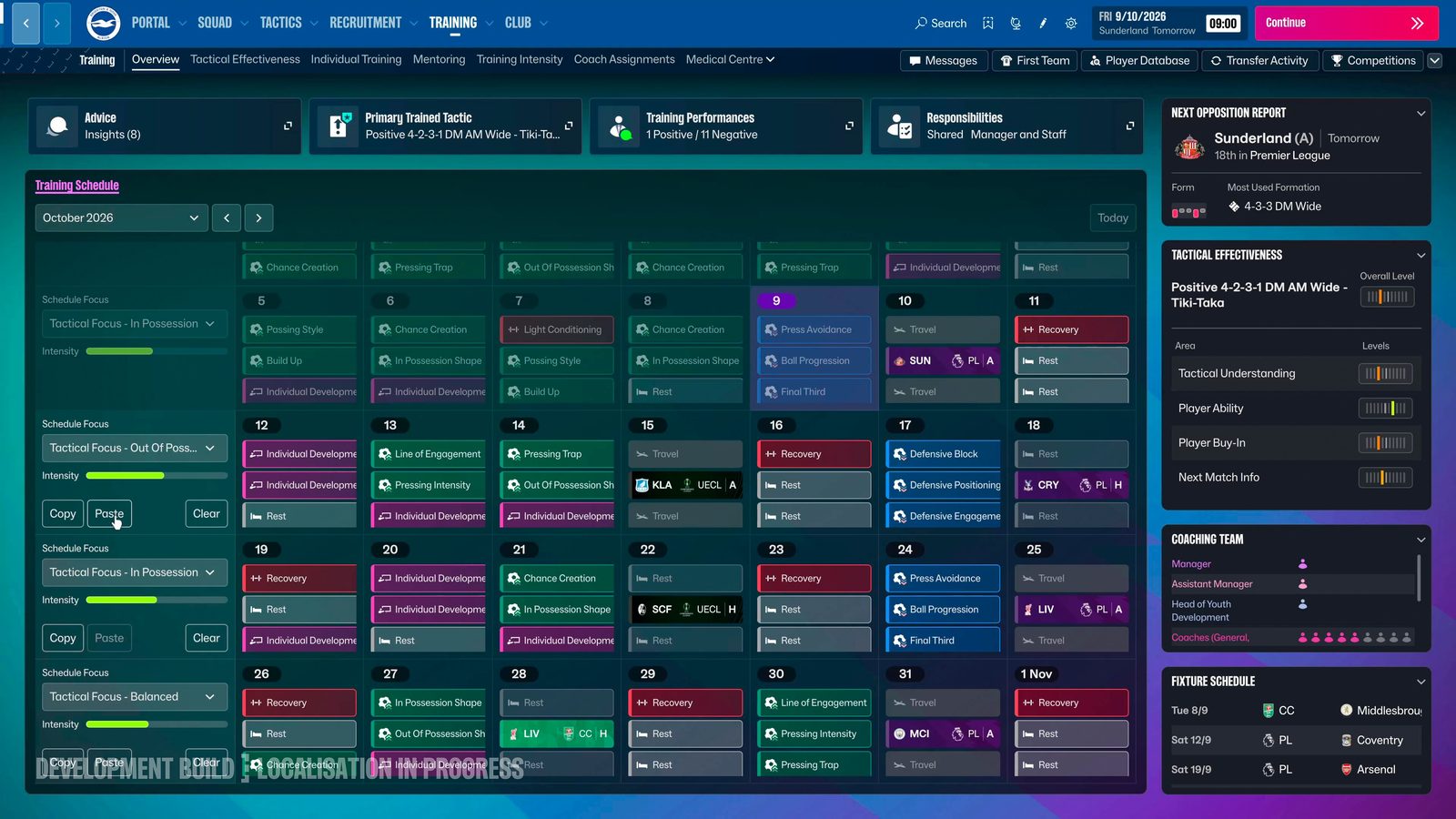
A long-requested feature is also back: copying and pasting training plans. If you build weeks with several sessions and repeat them throughout the season, you will save a lot of time. You also see straight away the physical load the plan will put on the squad, both this week and in the weeks ahead, instead of only thinking about the next match.
(Image: Sports Interactive)
This screen is worth a closer look. Each week in the calendar has a Schedule Focus, such as Tactical Focus – In Possession, Out Of Possession or Balanced, with an intensity bar and the Copy, Paste and Clear buttons right next to it. Session names are closely tied to tactics: Pressing Trap, Line of Engagement, Press Avoidance, Build Up, Defensive Block or Final Third, for example.
On the right you have everything you need to decide: the next opposition report, with their league position and most used formation, the Tactical Effectiveness panel, the coaching team and the fixture schedule. Along the top sit the advice tab, the primary tactic you are training, a summary of training performances and who is responsible for training. This is the screen shown in the clip SI posted on Instagram.
The first team trains for the next match
This is the big change. SI says it listened to real coaches, and FM27 training puts more weight on preparing for the next match and the next opponent. The old Units system, heavily focused on improving attributes, is gone. In its place come options designed to help you carry out your tactical plan in the next game.
In practice, you can have the team work on pressing high or defending in a low block, for example. Sessions also build cohesion and shared understanding, so players perform to their level in the tactic you have chosen. SI also says that, under the interface, the systems have been adjusted so your training decisions have a more visible effect on how ready the team is for the next match.
Each squad now has a clear purpose. The first team focuses on match preparation, cohesion and tactical understanding. The youth teams remain focused on development.
Individual training still matters
If you live for developing young players, you can relax. Individual training stays: you can work on each player’s attributes, on your own or with your coaching staff, and use individual instructions to teach new traits, new positions and so on.
SI talks about a balance to manage. Individual training improves attributes, and team training teaches the player to apply those improvements in your tactical plan. With your most promising youngsters, you will have to weigh long-term development against the need to win now.
National teams can train too
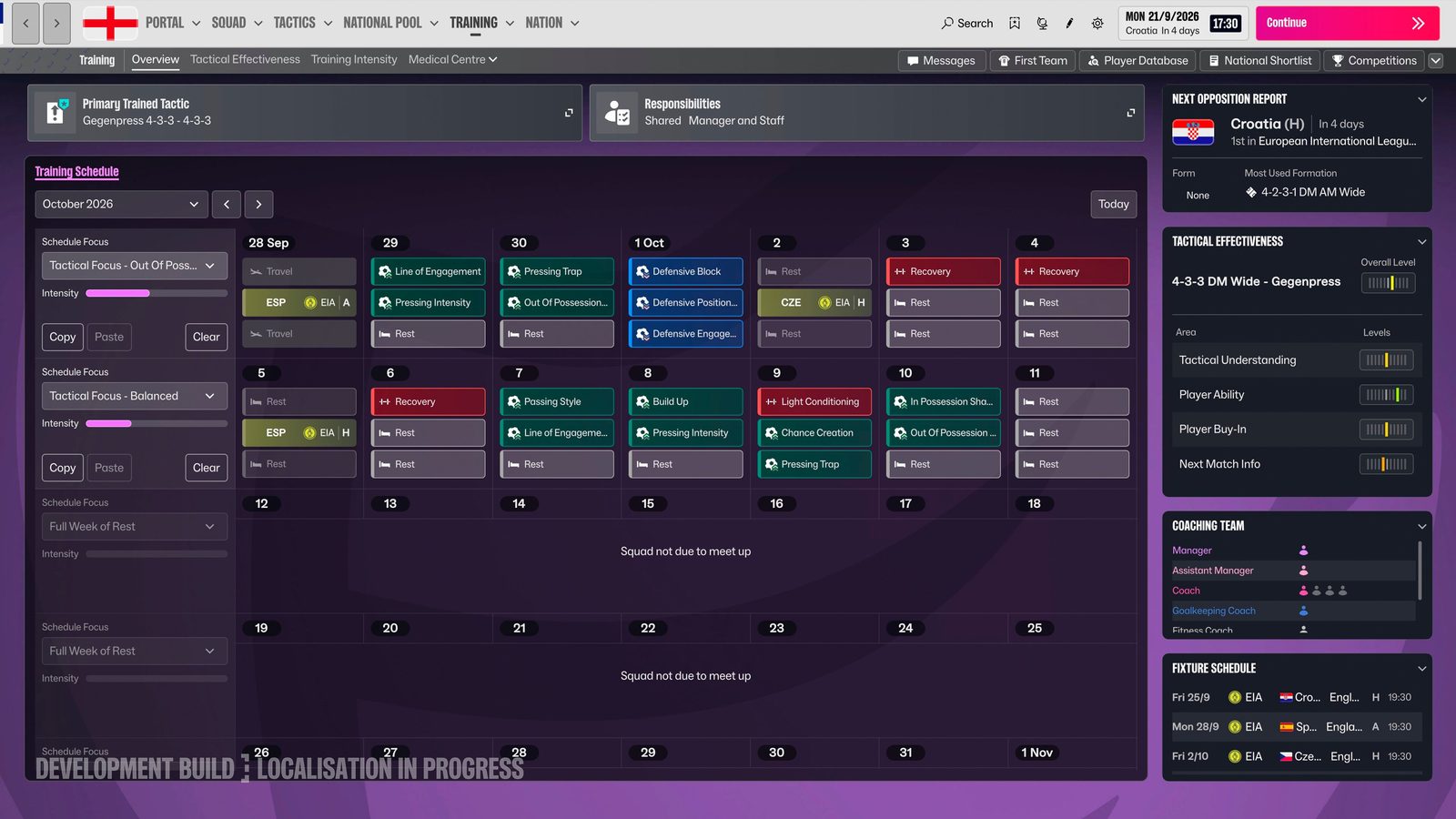
After many requests from the community, you can now create training plans with your national team during international camps, to prepare the squad better before tournaments and key fixtures.
(Image: Sports Interactive)
In SI’s image you can see England preparing for a match against Croatia. Camp weeks have sessions just like at a club, while the other weeks show a note that the squad is not due to meet up. There are also fewer tabs than at a club: overview, Tactical Effectiveness, training intensity and medical centre.
Tactical Effectiveness: what it is and how it works
Tactical Effectiveness replaces the Tactical Familiarity system and goes further. It connects training, tactics, scouting and recruitment, and measures how well each player, and the team as a whole, understands your tactics and is able to carry them out on matchday.
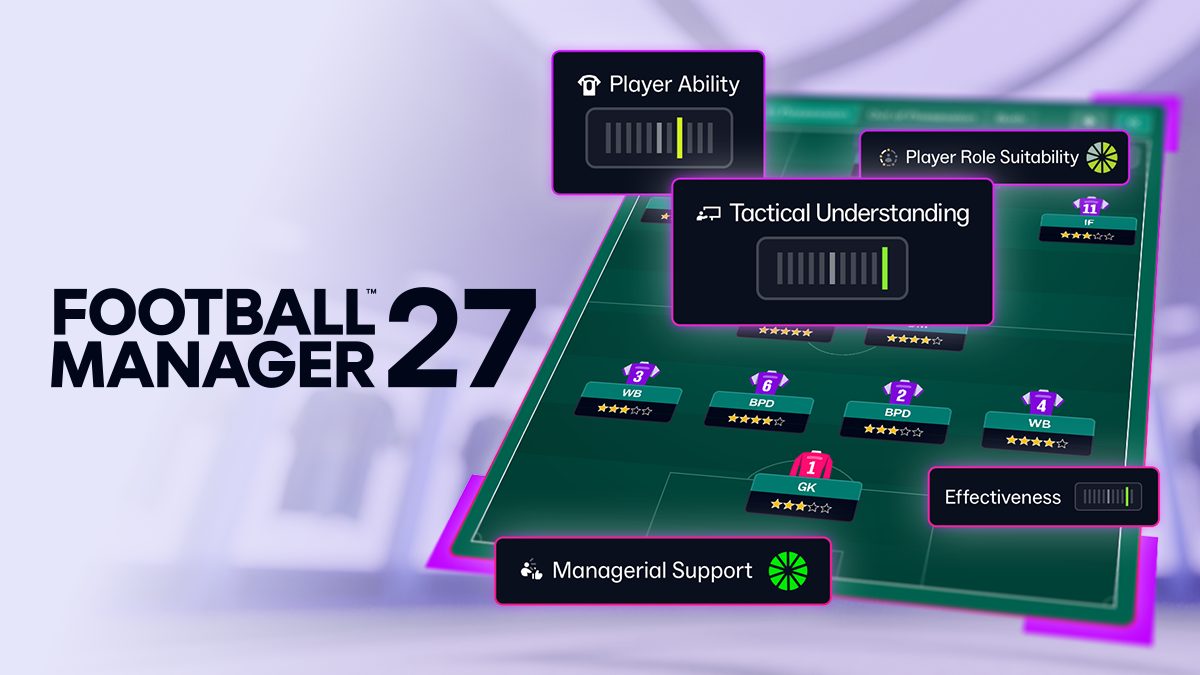
You will find it as gauges on the tactics, training and recruitment screens. The higher they are, the more comfortable the team is with your instructions and the more likely it is to carry them out well.
(Image: Sports Interactive)
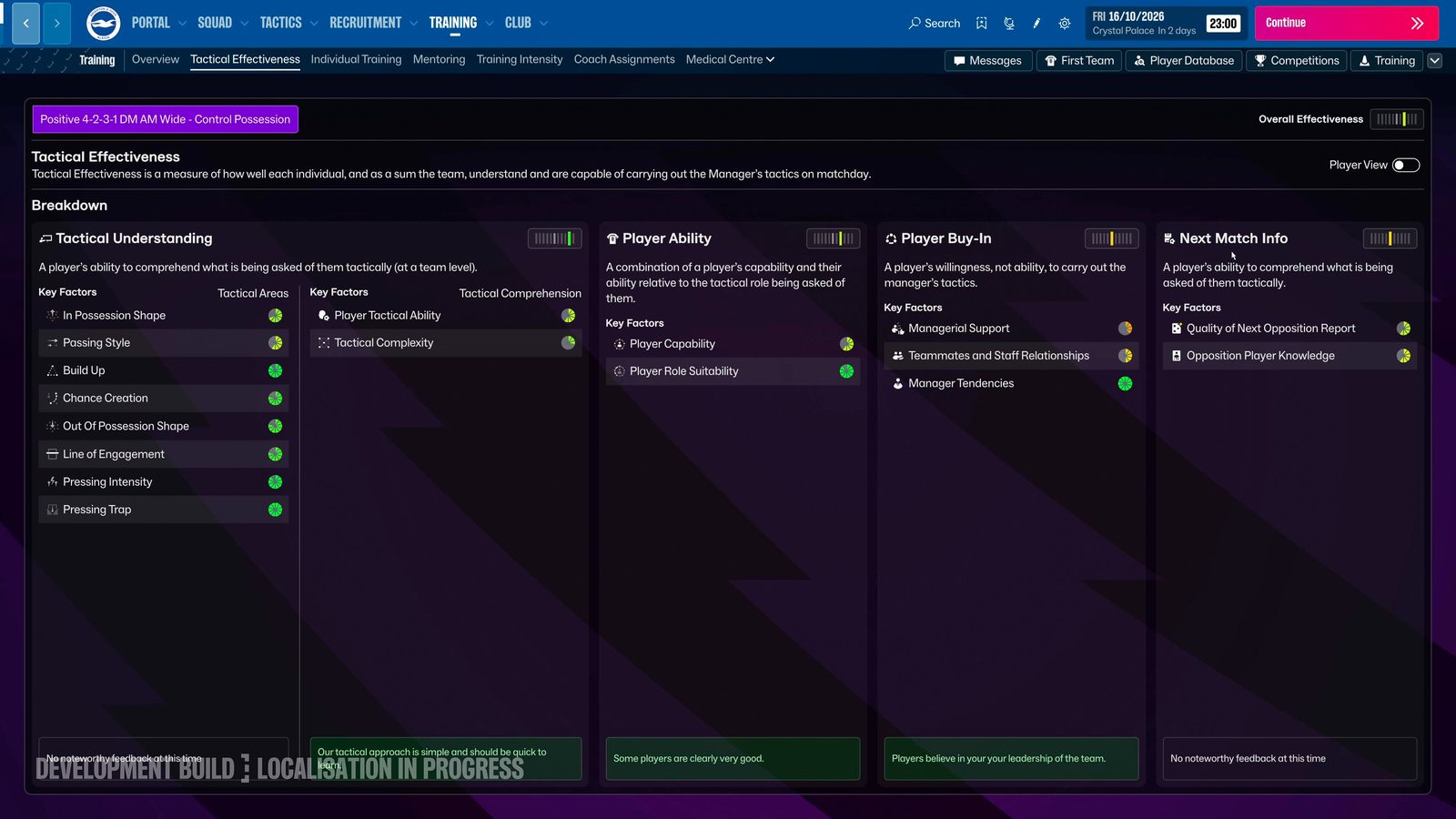
The system is built on four areas, and the detail screen shows what weighs on each one:
(Image: Sports Interactive)
Tactical Understanding
Measures whether players understand what you ask of them at team level. It looks at how well they know each area of your tactic, such as in-possession shape, passing style, build-up, chance creation, out-of-possession shape, line of engagement, pressing intensity and pressing traps. Players’ tactical ability and the complexity of your tactic also count.
Player Ability
Combines the quality of your players with how well each one suits the role you give them. Note that Player Role Suitability does not disappear: it becomes one of the factors in this area.
Player Buy-In
Here it is not about talent, it is about willingness. It measures whether players are prepared to do what you ask, and it is shaped by managerial support, relationships with teammates and staff, and your tendencies as a manager.
Next Match Info
Depends on the quality of the report on your next opponent and on how much your team knows about the players it will face. Having a good analysis department makes a difference again.
The same screen has a Player View toggle to see the data player by player, and each area has a box with comments from your staff. In SI’s image you can read, for example, that the tactical approach is simple and should be quick to learn, and that the players believe in the manager’s leadership.
Tactical Complexity: keep it simple or aim high?
Tactical Complexity is a new metric, closely tied to Tactical Effectiveness, that rises with the number of positions and instructions you set for the team, the players and the opposition.
The key point is that complexity has to match your squad. Fluid football with constant counter-pressing may be too much for a lower-league side. SI sums up the dilemma like this: a simple plan can work straight away but has a low ceiling, while a complex plan takes time to click as players adapt, but can go further in the long run.
On Reddit, SI added that the video shows an example of this, with a top-flight side reaching higher effectiveness than a lower-league side playing the same way. It ties in with what the previous deep dive said about fitness and stamina carrying more weight: pressing for 90 minutes non-stop will cost you more.
It counts when you sign players, too
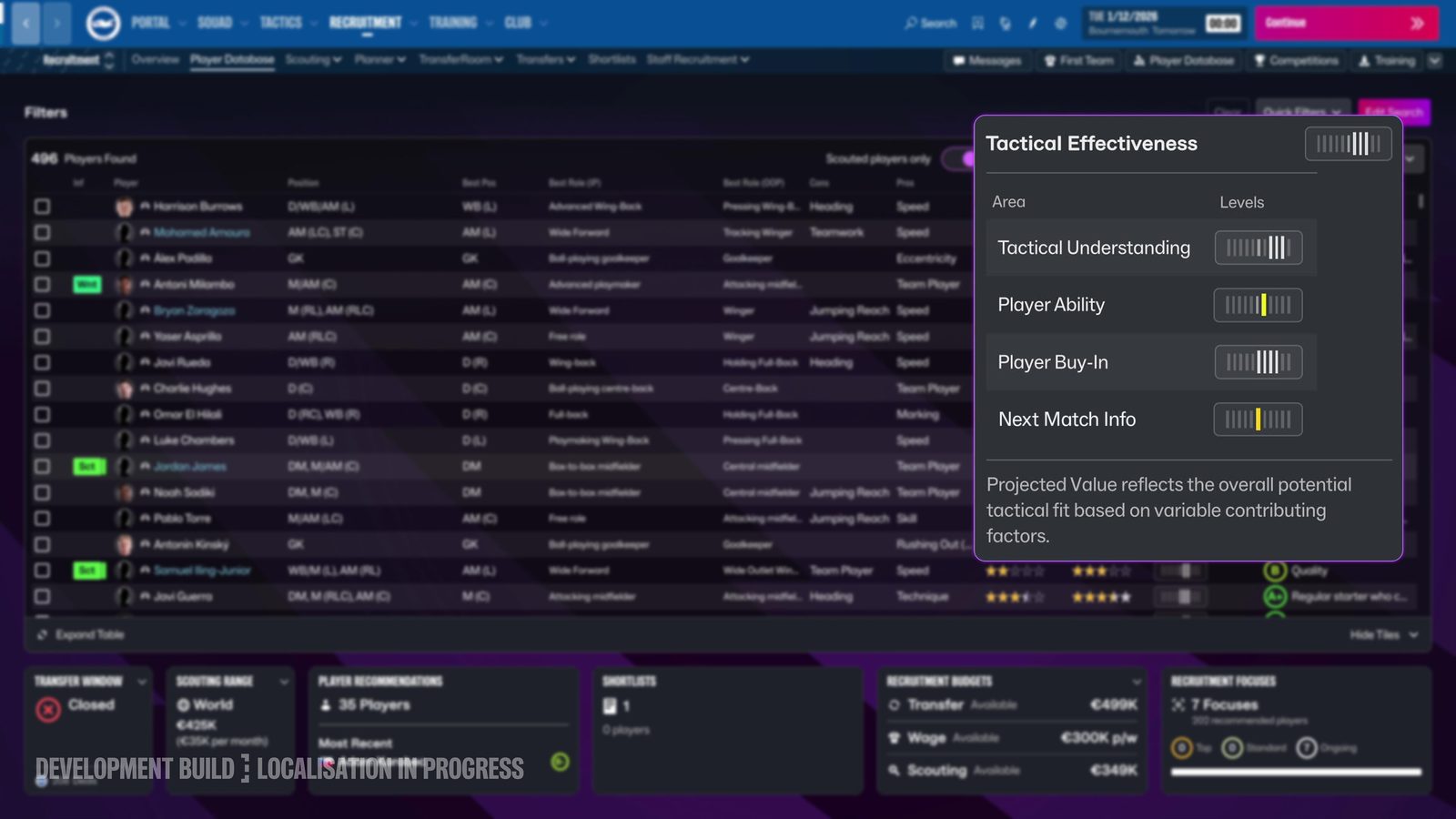
Tactical Effectiveness appears in Scout Reports and in the player database. It helps you see whether a target fits your tactic and whether they will have an immediate impact or need time to learn.
(Image: Sports Interactive)
In the image, the gauge appears in a pop-up over the player list, with the four areas and a note explaining that the projected value shows the player’s potential tactical fit. The names are blurred, and SI explained on Reddit that licensing work is still being finalised in this development build.
Effectiveness that changes over your career
The gauges do not stand still. They rise and fall with your decisions, your players’ form and what happens in the football world around you. Over time your style can become more effective, but SI warns that rival styles may become dangerous against yours. You will have to balance consistency with the ability to adapt.
If one of the areas is struggling, your staff leave recommendations on the overview screen, with hints on what you could change.
Two warnings from SI
The first is the usual one: the images come from a development build, with data that is still awaiting approval from rights holders, so everything may change before launch.
The second came in a reply on Reddit and is worth keeping in mind: Tactical Effectiveness is not an exact prediction of what will happen on the pitch. It is a guide to how likely your team is to carry out the plan. Football still has individual moments, swings in form and unpredictability.
What comes next
The next deep dive will be a written piece covering manager customisation and the new look of newgens. Today’s video already gives a small preview right at the end.
How the community reacted
When we read SI’s thread on r/footballmanagergames, it had 116 upvotes, 95% approval and just over a hundred comments. The reaction was more positive than for some of the earlier deep dives, but with a familiar note of scepticism.
What people liked
Training focused on the next opponent went down best, as it is far more realistic than the previous system. Being able to train with national teams was also widely celebrated, with one person noting that it only took a couple of decades. And some liked the idea that playing like Guardiola with a fourth-tier English side will no longer be rewarded.
Those less interested in tactics also found reasons to smile, such as being able to focus individual training on tackling.
What raises doubts
- Is it just a new interface? The most repeated criticism is that the current Tactical Familiarity barely makes a difference and that training does not always work as described. Many want to know whether what sits underneath has changed or only the way it is presented.
- Not enough explanation. Several people asked for a longer piece on Player Buy-In and Next Match Info: what influences them and how to improve them.
- Individual training. Some found the individual training screen worse than the old one, because you have to open each player one by one. Others wanted to know whether player development has changed under the hood, which was barely covered.
- The assistant is still in charge. There was no shortage of comments from people who will keep delegating training to the staff no matter what.
- The video. The subtitles burned into the video covered part of the screen, which annoyed those who wanted to see every detail.
On the game’s official Instagram the tone was similar: plenty of praise, the odd “let’s see the reviews first” and questions about youth training and the console versions.
What SI answered
- Tactical Effectiveness brings together aspects that already existed, such as familiarity, but goes deeper into player information, ability and personality, and presents everything in a single analysis split into four areas.
- It is not an exact prediction of the match, it is a guide to how likely the team is to carry out the plan.
- Your staff give recommendations on the overview screen when an area is struggling.
- A lower-level side will find demanding tactics harder than an elite side, and physical stamina also counts for more.
- An interface bug spotted by a user in the images has already been fixed in the latest builds.
Our take
This deep dive deals with one of the areas of FM that most people delegate and forget. Putting training at the service of the next match makes sense and brings the game closer to what happens at real clubs. Tactical Complexity could be the most interesting addition for those who like starting at the bottom: if it works as promised, taking a district-league side with a tactic copied from a European champion will no longer be a guaranteed recipe.
Tactical Effectiveness looks good and brings together in one place information that used to be scattered. The community’s doubt is fair, and it is ours too: Tactical Familiarity already existed and was hardly felt on the pitch. If Tactical Effectiveness is just a nicer shop window for the same numbers, nobody will leave autopilot. If it really carries weight in the match engine, it changes the way we build squads.
For those of us who keep an eye on talent, recruitment gains a new layer. Knowing whether a signing will settle in straight away or needs months could matter as much as their attributes. And individual training stays, which is good news for anyone who lives for wonderkids.
The usual caveat applies: this comes from a development build and promotional material. Only by playing will we find out what really matters.