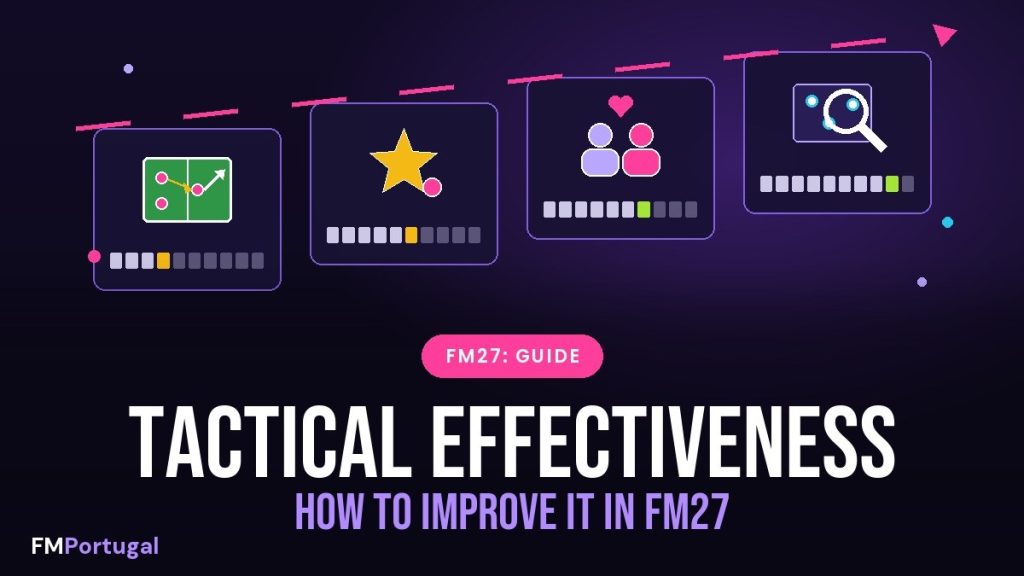
Tactical Effectiveness is the big new feature in FM27, and it will weigh on every save you play. In other words, having the best tactic on paper or the best players is no longer enough. Now the game also measures whether your squad understands your ideas, can carry them out and believes in you. So we have gathered what you can do to improve your team’s Tactical Effectiveness, based on the guide Sports Interactive published on 6 November.
If you are not sure how the system works yet, start with our deep dive on training and Tactical Effectiveness. Here, the focus is practical: what to change in training, in the squad, in the dressing room and in your match preparation.
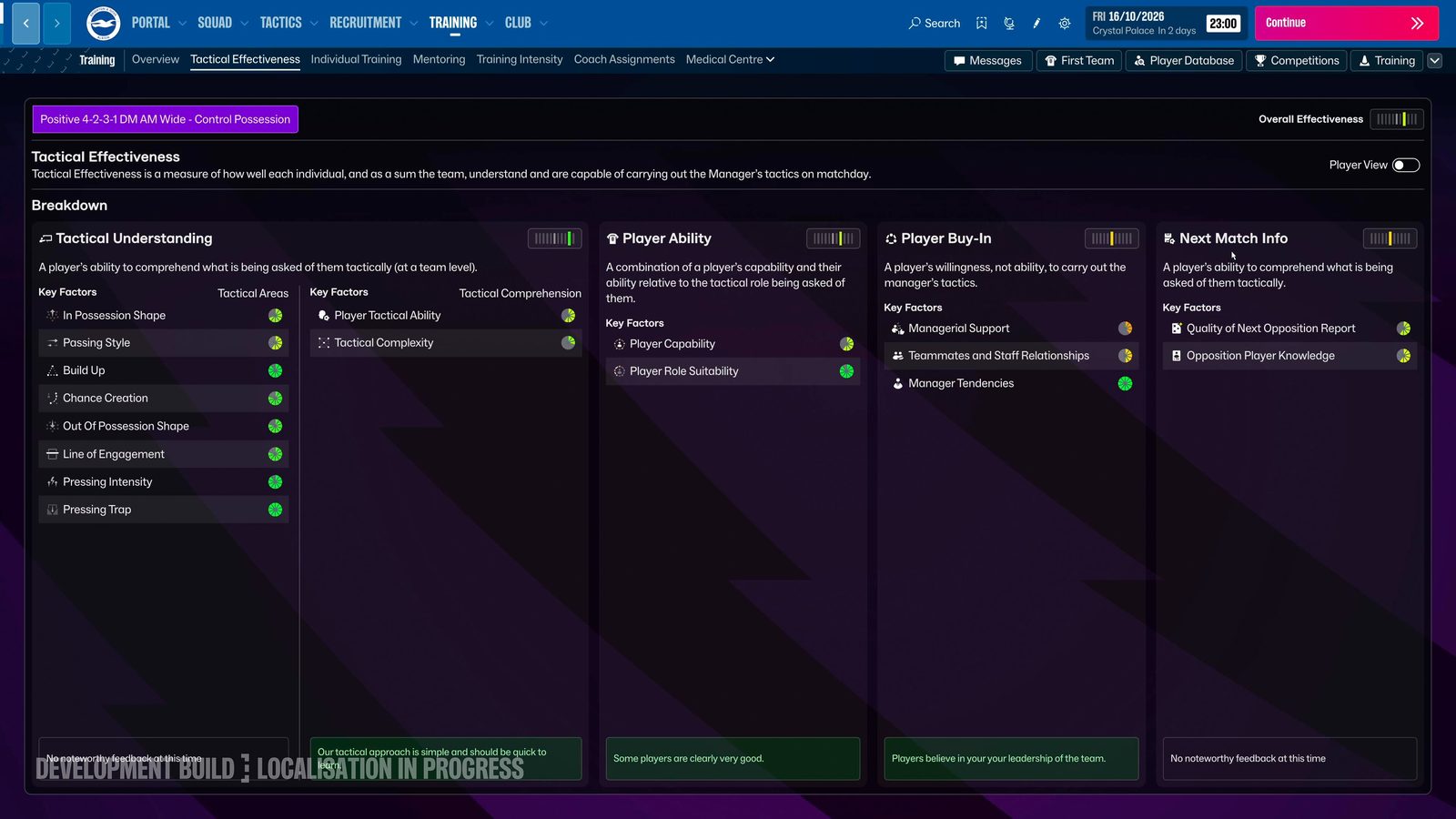
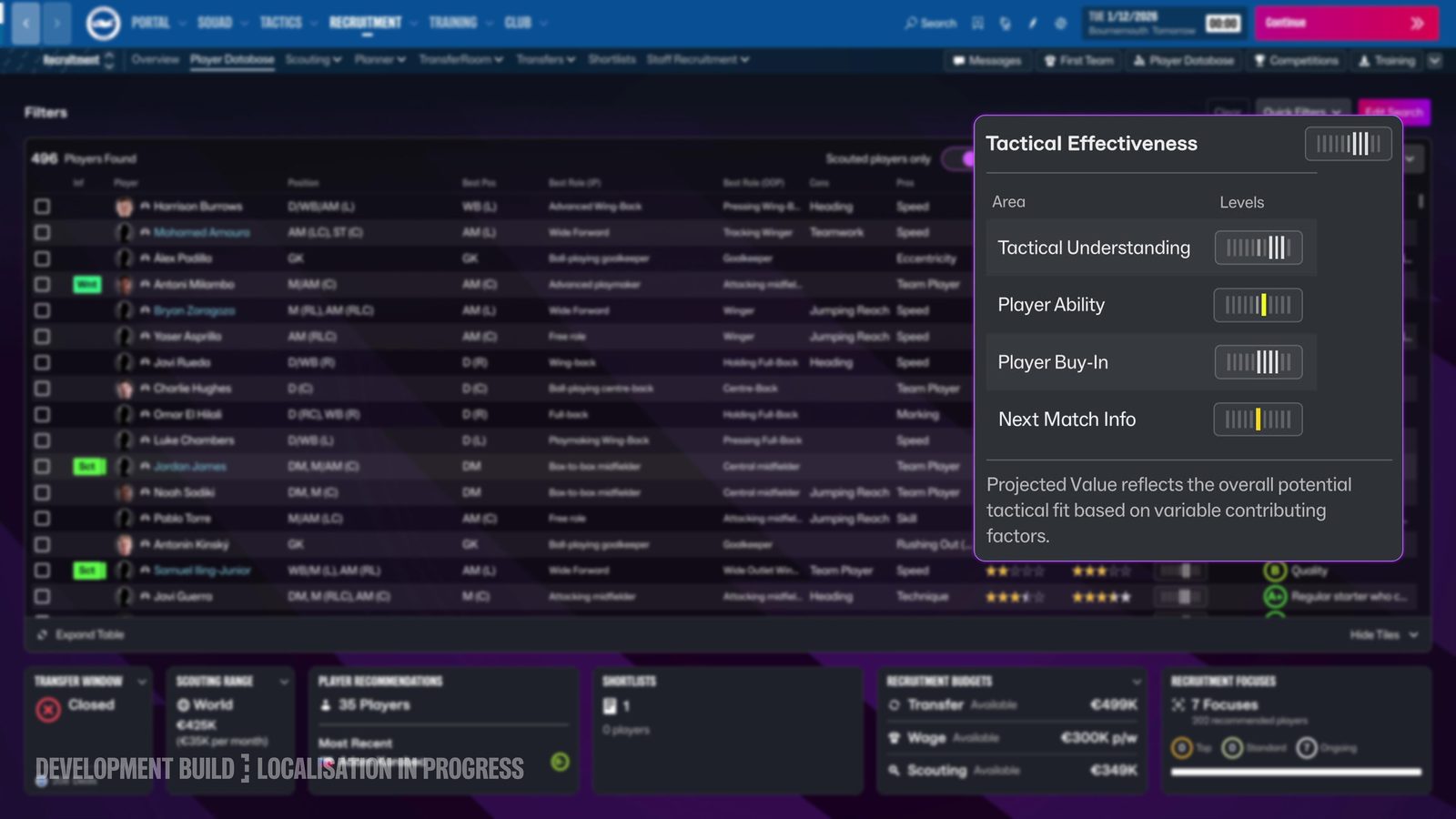
The four areas of Tactical Effectiveness and what drives each one (Image: Sports Interactive)
The four areas at a glance
Tactical Effectiveness is split into four parts, and each one has its own meter:
- Tactical Understanding: whether your players understand what you ask of them.
- Player Ability: whether they have the attributes and positions to do it.
- Player Buy-In: whether they are willing to follow your vision.
- Next Match Info: how much you know about the opponent.
Also, SI points out an important detail: AI clubs play with this system too. So the other managers pick tactics and sign players with Tactical Effectiveness in mind, just like you.
How to improve Tactical Understanding
First, Tactical Understanding is about knowing what to do on the pitch. For example, which shape to hold, how high the defensive line is, when to press and how patient to be on the ball. Setting up a tactic is easy, but getting the squad to understand it takes time.
- Train the tactic: above all, your weekly schedule should include plenty of sessions on the key parts of your approach. However, do not cut the other training types, which have their own benefits.
- Do not change at the first setback: familiarity builds over time. So do not drop your tactical identity after one defeat or one goal conceded.
- Use players who already know you: players who have worked with you before, even at another club, respond better to your training. In other words, bringing two or three trusted players when you move club is now worth more.
- Use up to three tactics, without overdoing it: a plan B for certain matches helps, as long as the squad has trained it beforehand. Even so, your main tactic will always be the most familiar.
- Hire good coaches: finally, quality coaches in your training categories also push this meter up.
If you do not want to build your schedule from scratch, our FM27 training plans are a good place to start.
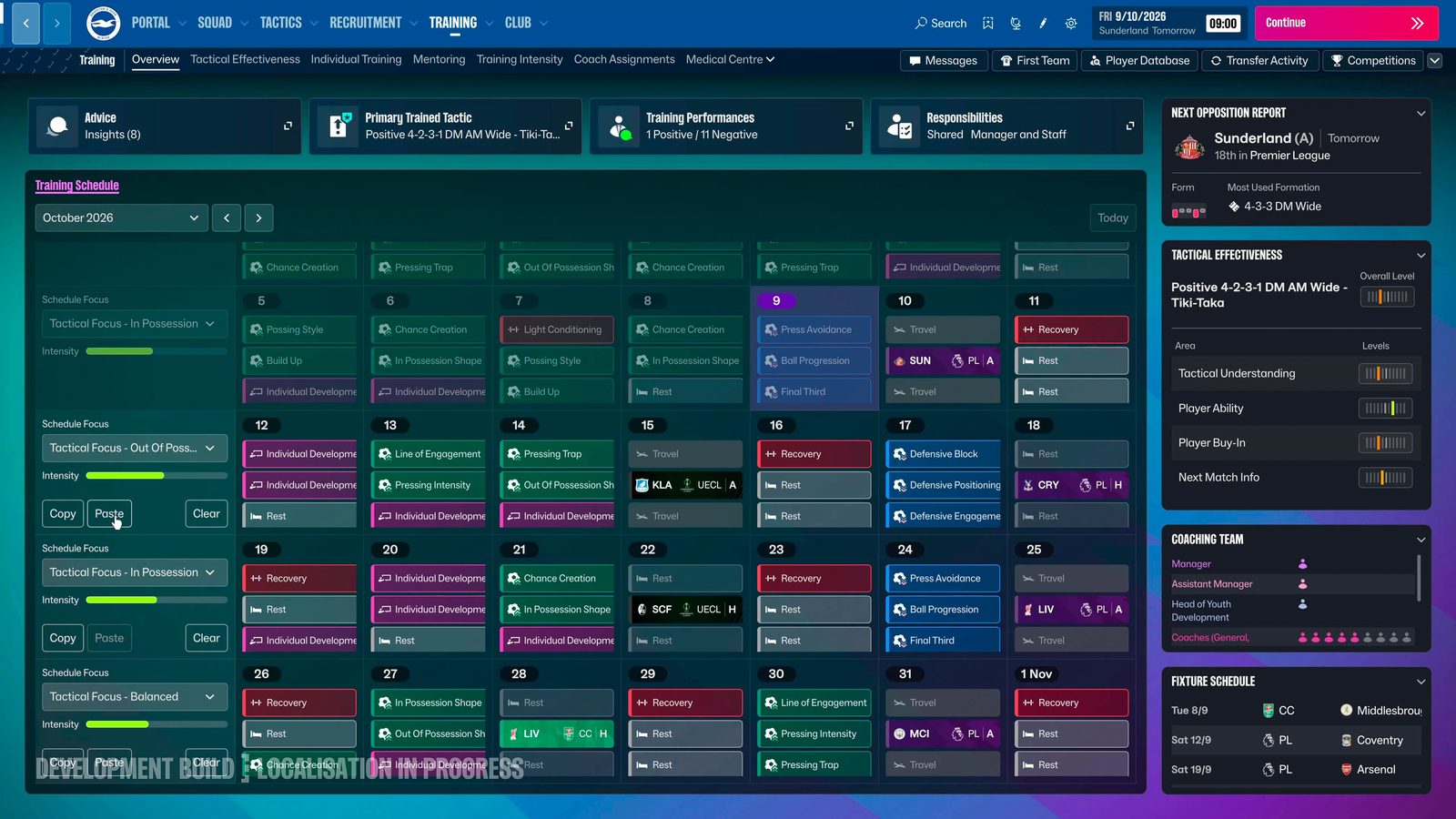
The weekly training calendar, with the next opponent beside it (Image: Sports Interactive)
How to improve Player Ability
Here the question is simple: do your players have the attributes and the right position for what you ask? Also, are they comfortable both in and out of possession?
SI gives a clear example. A central midfielder may be fine as a Channel Midfielder when your team has the ball. However, if you then ask him to be a Screening Defensive Midfielder out of possession, without the attributes or the familiarity, he will be less effective until he adapts.
- Play the best players you can: it sounds obvious, but it is still the base of everything.
- Respect natural positions: whenever possible, play each player in his own position, both in and out of possession.
- Start simple: do not fill your tactic with instructions before the squad knows it well. Then add more as the players adjust.
- Or go all in, but be patient: you can also put everything in from day one. In that case, expect a few bad results while the team learns.
However, there is a warning for anyone who likes to start at the bottom: the level of your players and coaches weighs heavily on Tactical Effectiveness. So at a small club results take longer to show, or may be limited. On the other hand, the same instructions at an elite club work faster, because the players are better equipped, physically and mentally.
How to improve Player Buy-In
Player Buy-In is the newest part and, for us, the most interesting. In other words, it measures whether the squad believes in you and really wants to follow your vision. So your reputation, your leadership and the way you handle personalities all count.
- Be consistent with your style: when your tactic matches the tendencies you picked for your manager, players see that consistency and buy in more.
- Look at the hierarchy and the groups: the Hierarchy and Social Groups systems become key to a united dressing room.
- Sign for the dressing room: before closing a deal, check the personality and the scout reports. For example, will he fit your core group? Does he adapt well to change?
- Praise those who earn it: finally, build a good atmosphere and praise players when they train and play well.
In practice, attributes and average ratings are no longer enough. For example, a squad of Perfectionists in the same social group can do better than a more talented but less united one.
Tactical Effectiveness also shows up when you sign players (Image: Sports Interactive)
How to improve Next Match Info
Knowing your opponent always helped, but now it counts towards how effective your tactic is. This meter depends on two things. First, the quality of your opposition reports, which comes from the quality of your scouts. Then, what you know about the other team’s players: whether you have scouted them before, or whether they play in a league you know well.
Just like in real life, facing your domestic rival for the fourth time in a season is not the same as travelling to face an unknown side in a European qualifier.
- Hire good analysts: strong Performance Analysts make a difference.
- Delegate the reports: in Responsibilities, make sure someone provides the Opposition Analysis Reports.
- Read the reports: look at the opponent’s strengths, weaknesses and tactical trends.
- Adjust to what you know: with detailed analysis, you can be more specific. Against unfamiliar opponents, however, keep the plan simple and adapt during the match.
Quick checklist before every season
To sum up, here is what to review at the start of each season:
- Pick one main tactic and at most two alternatives, and train them.
- Put good coaches in your training categories and strong analysts in the analysis department.
- Check that every player plays in his own position, in and out of possession.
- Look at the personality and social group of new signings before you sign them.
- Make sure opposition reports are delegated, and read them before matches.
- Give the team time, and do not change everything after one bad week.
Our take
Tactical Effectiveness takes aim at the habit of copying a «magic tactic» from the internet and winning everything. Since the game now measures whether the squad understands and accepts the tactic, the same tactic can work well at one club and poorly at another. So we like the idea: the dressing room, the coaches and the scouts now carry real weight. Still, we will only know if the balance is right after a few weeks of long saves, from 10 November. Meanwhile, see how Tactical Tweaks work during matches.
Sources
- Tactical Effectiveness: Understanding FM27’s Key New Feature (footballmanager.com, FM Stag)