
In the first 260 years, FC Porto stood out as the biggest power, at home and above all abroad: 110 league titles, 13 Champions Leagues, 10 Club World Cups, 97 Super Cups, 83 Portuguese Cups and 66 League Cups. Next came Sporting, with 5 Champions Leagues, and in third Benfica, in free fall and already 19 titles behind the Dragons, with only 3 Champions Leagues (and just one in 260 years).
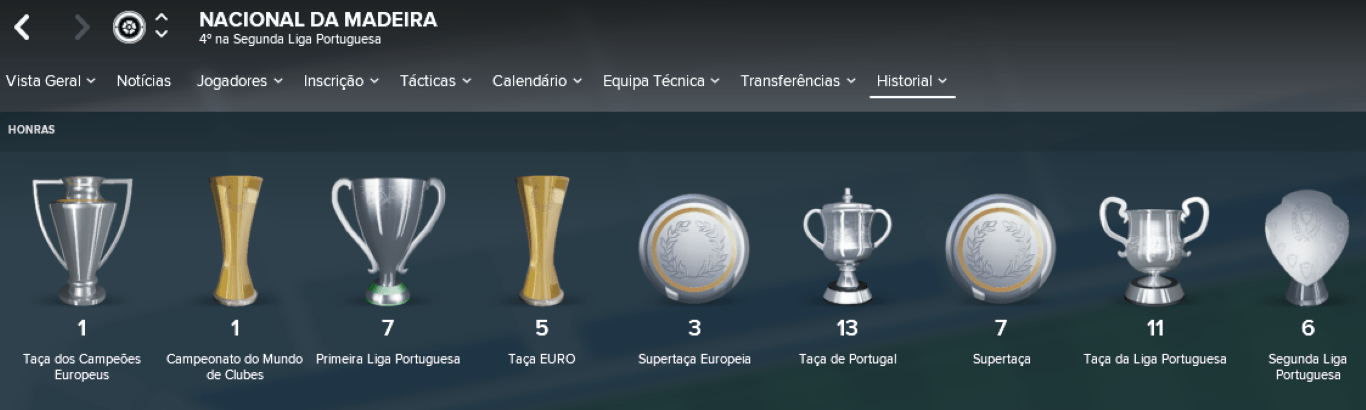
But they were not the only big clubs. Vitória de Setúbal had 36 league titles and 2 Champions Leagues, and Nacional da Madeira ended the first quarter of the simulation in style, with 7 league titles and 1 Champions League.

The matrafonas win the title
In 2279 tradition held: another party on the Avenida dos Aliados for Porto’s 111th title. But it would be the only one that decade, dominated by Vitória de Setúbal (seven titles), which ended with a first-time champion: Torreense.
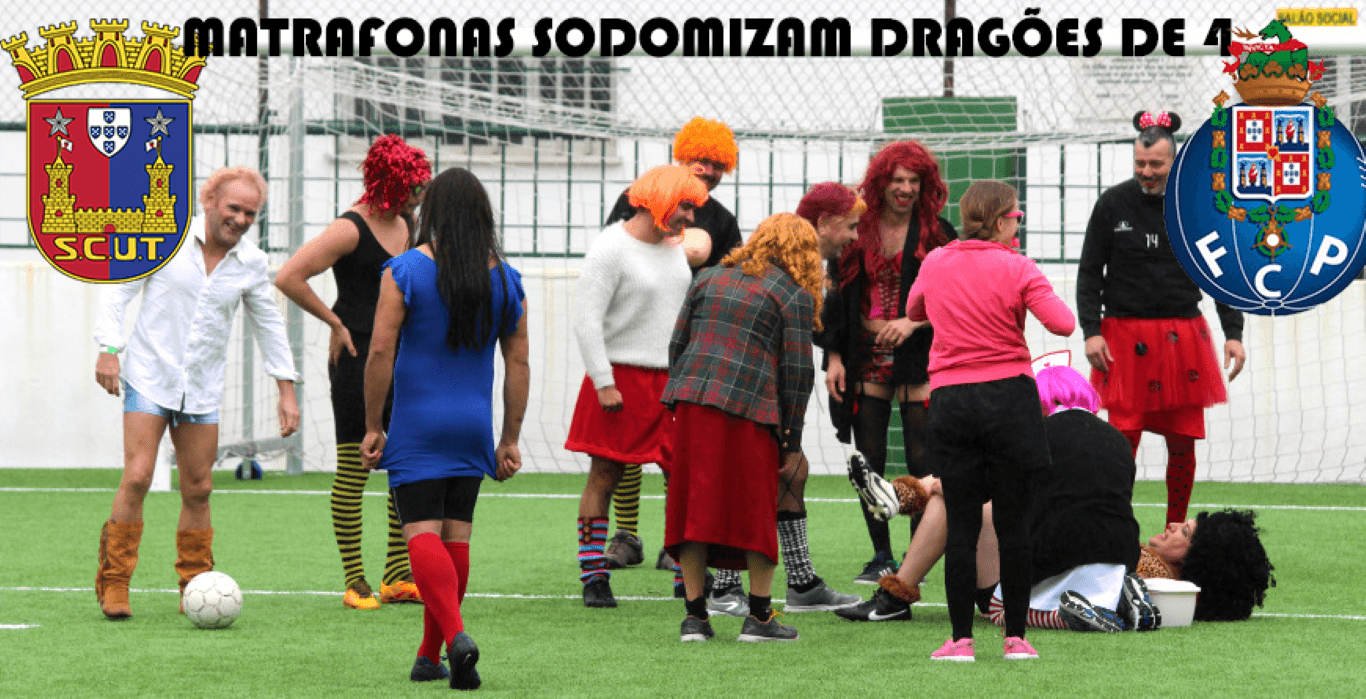
In the title-clinching game, funnily enough at the stadium of reigning champions FC Porto, the Arena José Maria Pedroto, the players honored the Torres Vedras carnival tradition: they dressed up as women and thrashed the hosts 4-0.
The next day, the newspaper front pages made sure to celebrate the feat of the matrafonas.
Up to 2345, the year of Torreense’s next title (after 17 podium finishes!), Braga also suffered their first relegation of the simulation, in 2289.
In that period, only the big four won the league, but Porto’s lead over Sporting and Benfica had already shrunk to four and five titles, respectively.
Porto’s collapse
The 2337 title marked the start of a far from happy era for the Dragons. A series of undignified finishes culminated in relegation to the second division in 2400, with an immediate return the following season after easily winning the second tier.
In that period, FC Porto only finished in the top three twice and completely missed the title train.
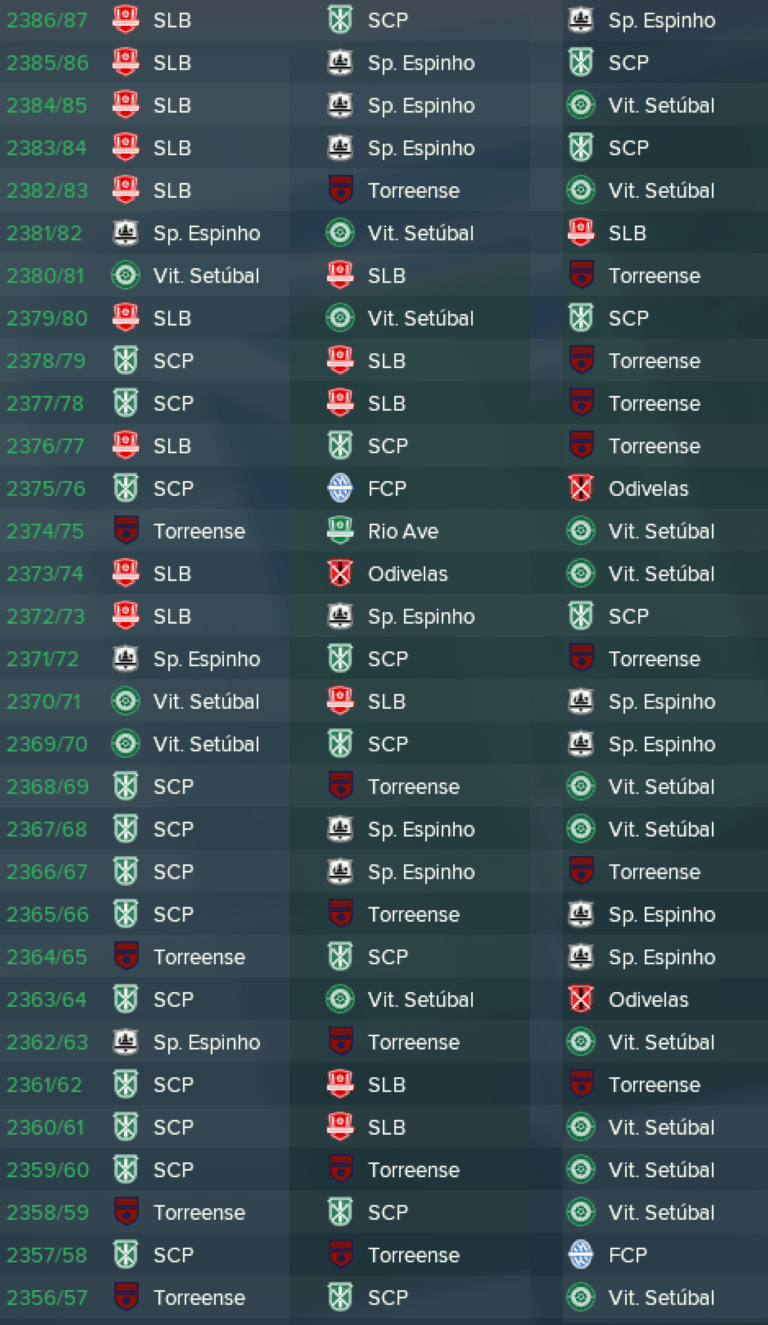
At first, it was Torreense who took the Dragons’ place in the fight for trophies, winning several. Vitória, Odivelas and Sporting de Espinho also kept bothering the Lisbon giants, and Espinho even became champions three times between 2363 and 2382.
Even before FC Porto went down, Belenenses, who had never been relegated, dropped to the second division in 2368 and to the Campeonato de Portugal in 2389.
A two-horse race
Not even FC Porto’s return changed the picture. The Dragons stayed far from the top and, with falling attendances, moved to a smaller stadium: the 82,000-seat Arena Fernando Gomes replaced the 118,000-seat Arena José Maria Pedroto, the scene of so many victories.
Between 2383 and 2452, apart from rare exceptions from Torreense and Vitória (two titles each), it was all Benfica and Sporting, with a slight edge to the Eagles, who once again became the country’s most successful club. Alverca, Gafanha and above all Sporting de Espinho also appeared on the podium, but got no further.
A country painted green and white
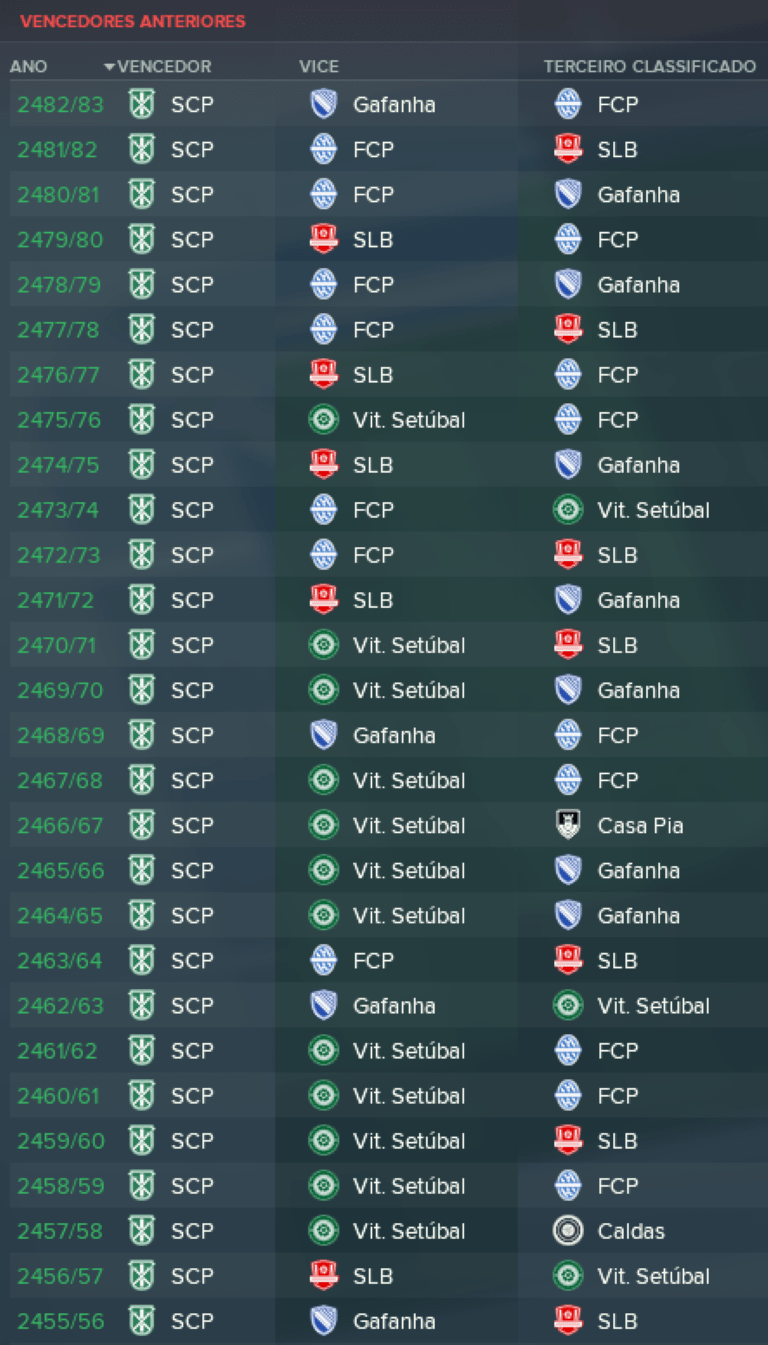
Sporting fans, mark your calendars: from 2453 on, it is all yours.
That was 31 consecutive titles, smashing the previous record of 11, held by Vitória de Setúbal. The old dream of Bruno de Carvalho’s descendants came true: green became the only color of the national flag.
It took FC Porto to briefly interrupt the Lions’ dominance, ending 147 years without a title. It did not last: the Lions came roaring back, won 32 of the next 35 titles and ended this part of the simulation with 12 in a row. They celebrated with a 135,000-seat stadium in 2515, the biggest yet.
Benfica, still in the hands of the Vieira family and going through the longest drought in their history (67 years without a title), responded immediately with the 140,000-seat Parque de Jogos Cosme Damião in 2517. The attendance record was broken precisely in the derby against Sporting, won 2-1 by Benfica in December 2517.
The cups
In the cups, it was a different story, with winners of every kind. Odivelas, Gafanha, Sporting de Espinho, Alverca, Rio Ave, Belenenses, Torreense and Nacional won the most, but Bragança, Benavente, Arouca, Caldas and Académico de Viseu, among others, also got their hands on silverware.
European competitions
In these 250 years there were far fewer Portuguese teams in Champions League finals. But one of them stood out so much that it ended this part of the simulation as Europe’s biggest power.
Only the big three reached the final. Benfica (two) and FC Porto (one) lost the finals they played, while Sporting added 13 more titles to the 5 they already had, including two finals at their Lisbon rival’s stadium and a derby in the 2347 final, won on penalties.
That final was repeated, with the same outcome, in the 2382 Europa League, also decided on penalties.
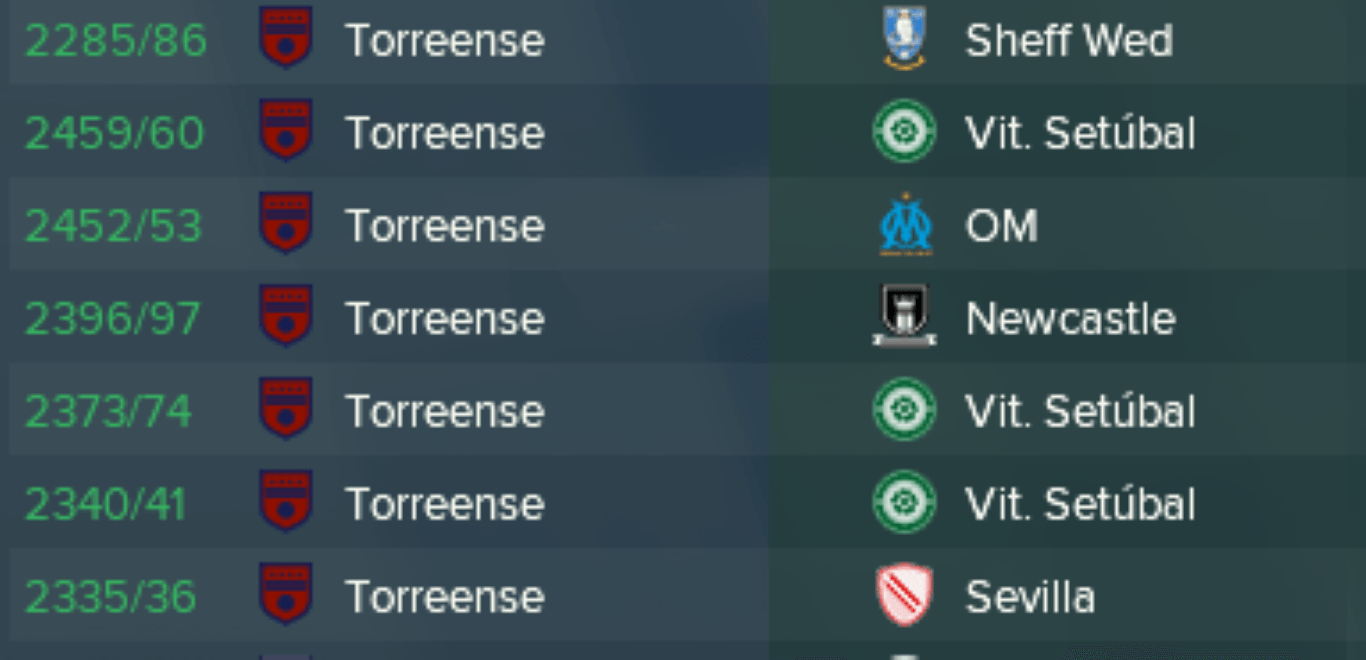
In the Europa League, the Portuguese presence was much greater: nearly 80 finals with at least one Portuguese team, although more than 50 ended badly. Benfica, Sporting, FC Porto, Rio Ave, Vitória de Setúbal, Gafanha and Torreense won the trophy at least once. Nacional, Espinho and Odivelas reached several finals but never brought it home.
Special mention for the three finals between Torreense and Vitória de Setúbal, with Setúbal losing every time.
The national team
The national team kept up its level: it went from 2 to 4 World Cups, from 10 to 21 Nations Leagues, from 5 to 7 Olympic Games and added 3 European Championships to the 8 it already had. In the Confederations Cup, it still has just one.
Among the surprises: Scotland, with 3 European Championships and 3 World Cups, Mexico’s 8 World Cups, Saudi Arabia’s back-to-back world titles (2302 and 2306), the first African World Cup win, by Cameroon, in 2458, and the recent crowning of the United States, in 2518.
The top 12
An honorable mention to Odivelas, who reached the top flight and have already lost two Europa League finals. And now, the 12 best Portuguese teams so far:
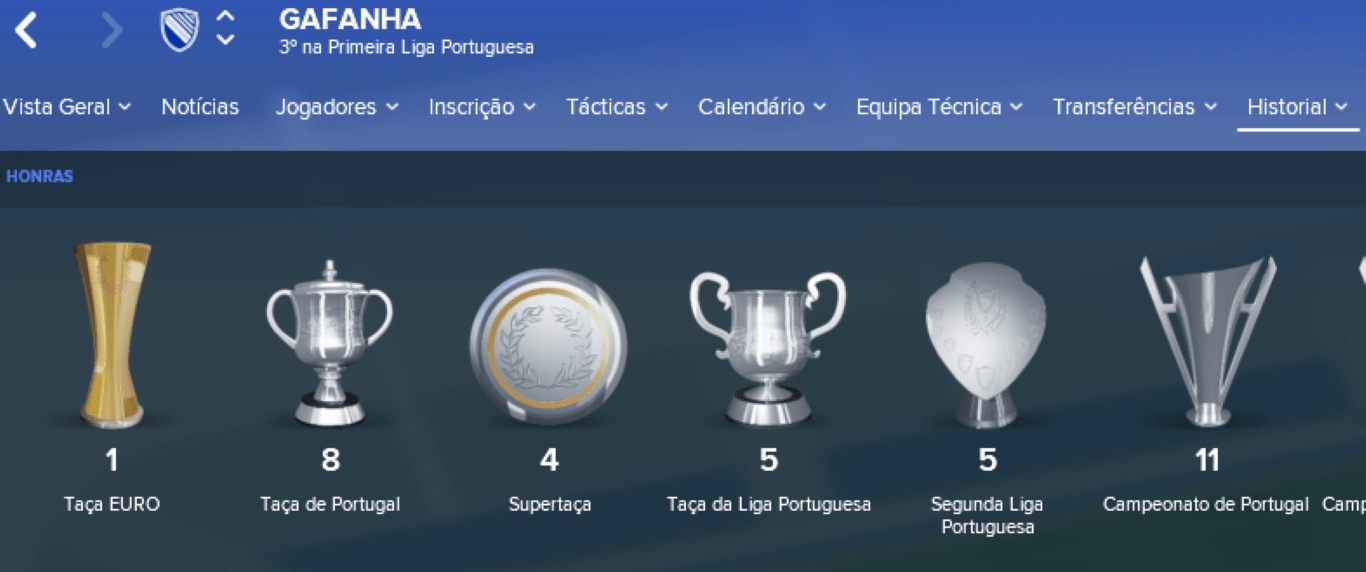
12. Gafanha: one Europa League in four finals and one UEFA Super Cup lost. Still going strong in the Primeira Liga.
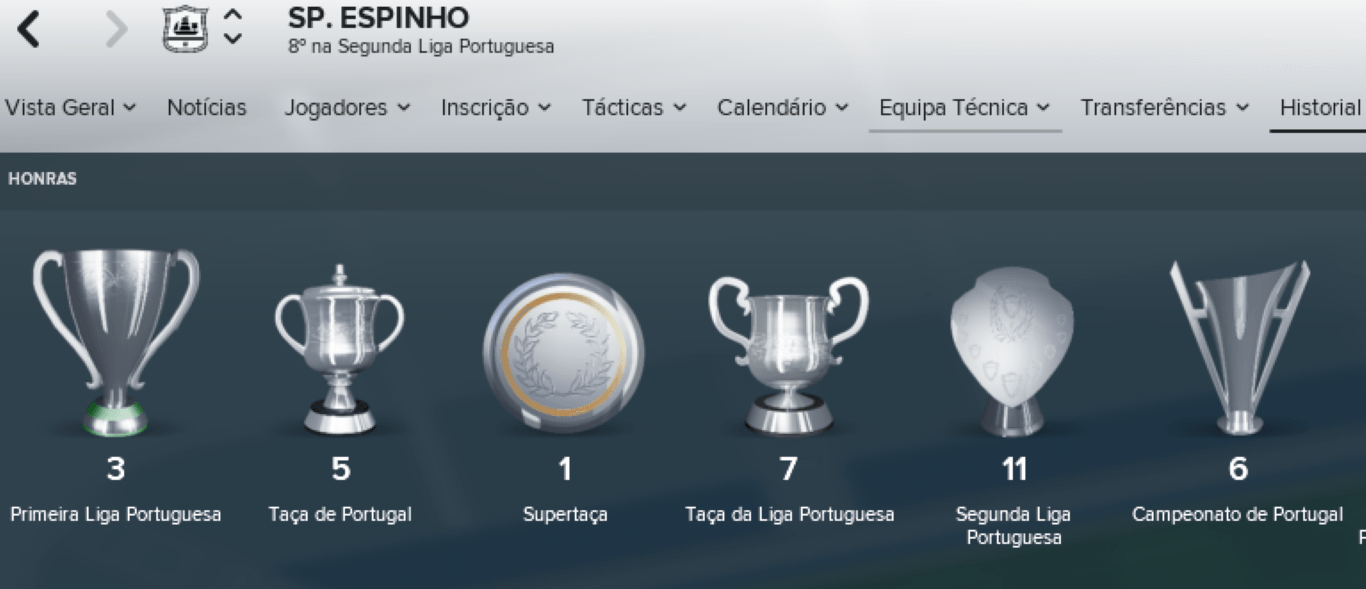
11. Sporting de Espinho: four Europa League finals, all lost. Relegated to the second division after a golden era.
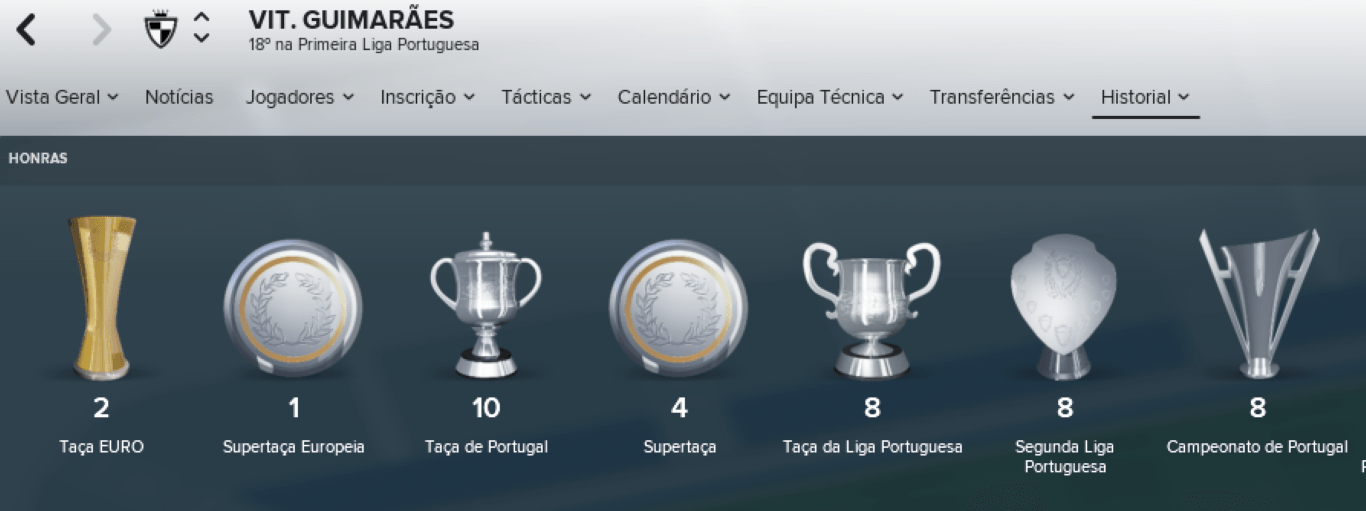
10. Vitória de Guimarães: two wins in six Europa League finals and one UEFA Super Cup in two. Just back in the Primeira Liga after a dark period.
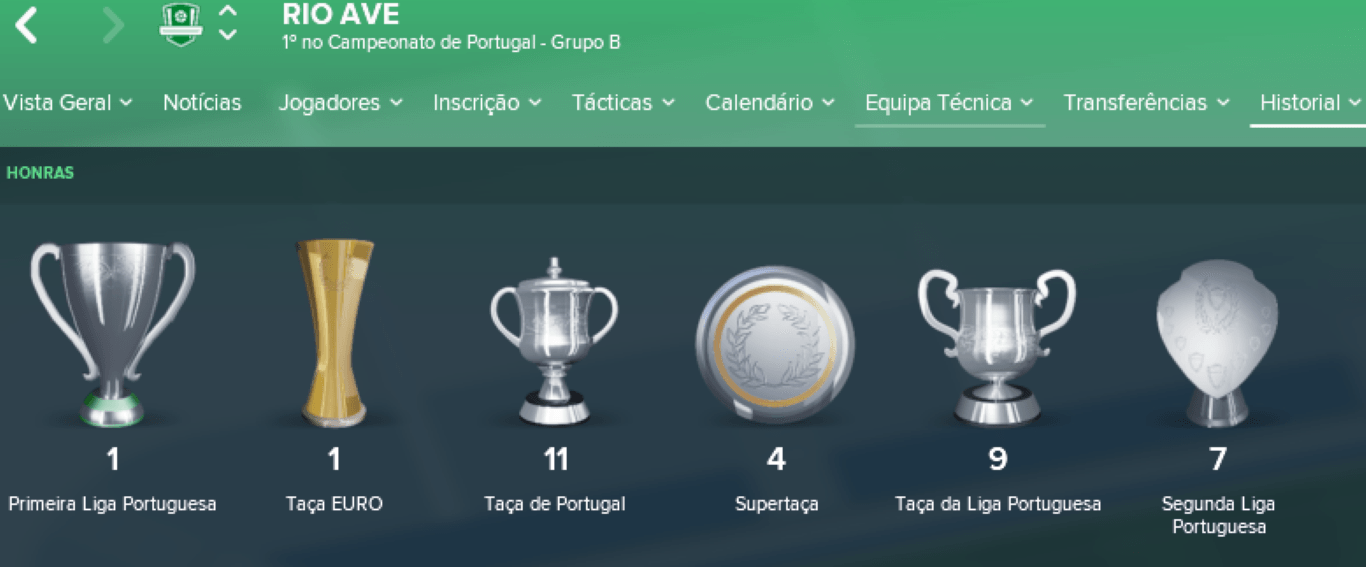
9. Rio Ave: one Europa League in four finals and one UEFA Super Cup lost. Stuck in the Campeonato de Portugal.
8. Belenenses: three Europa Leagues in nine finals, but lost every UEFA Super Cup. Bouncing between the second division and the Campeonato de Portugal.
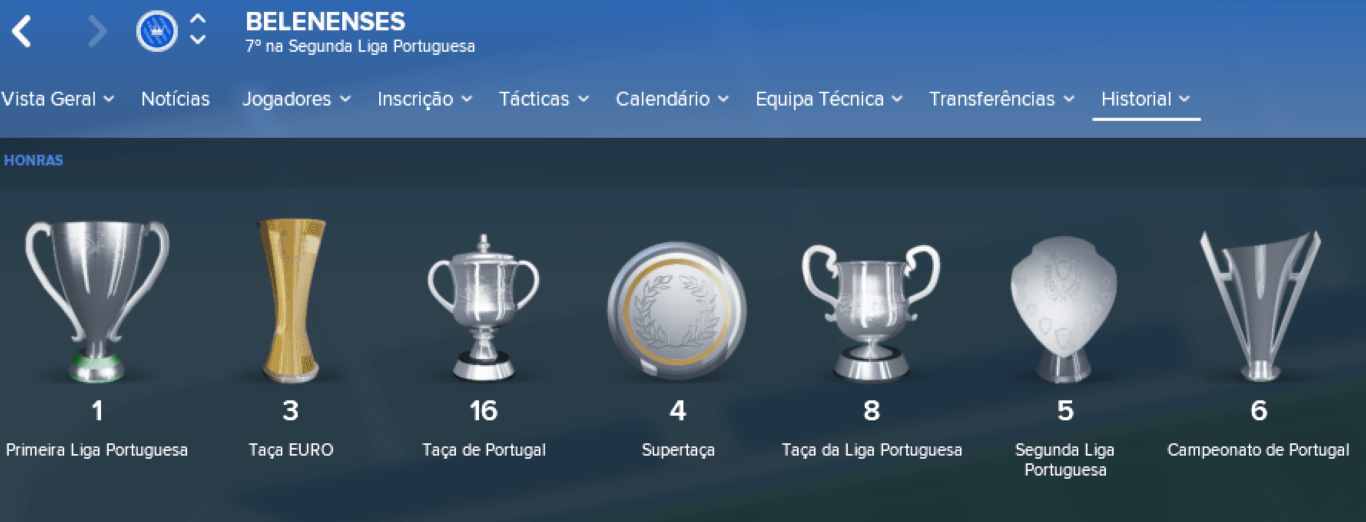
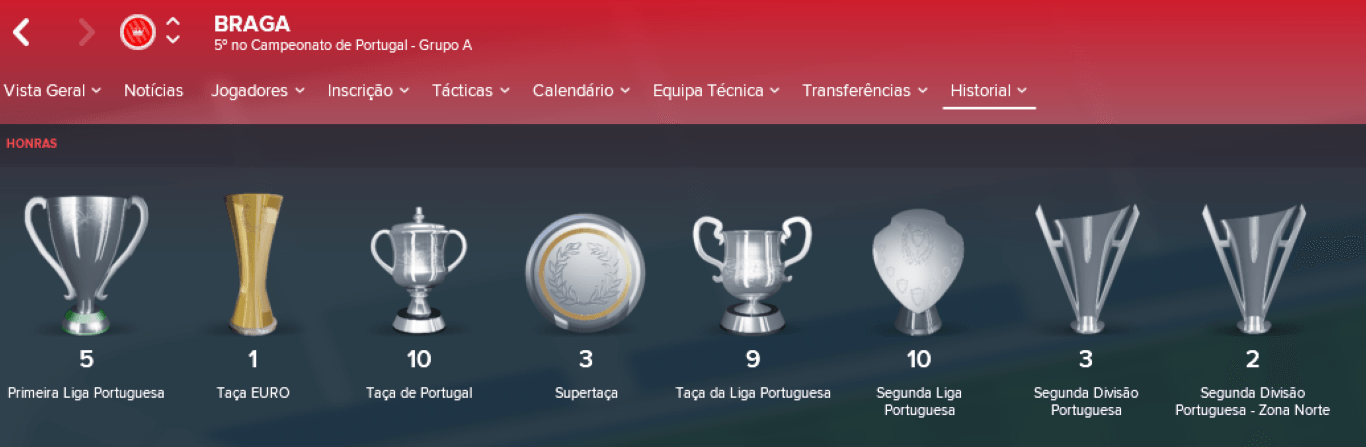
7. Sporting de Braga: just one Europa League in seven finals. After a promising start, plummeted through the lower divisions.
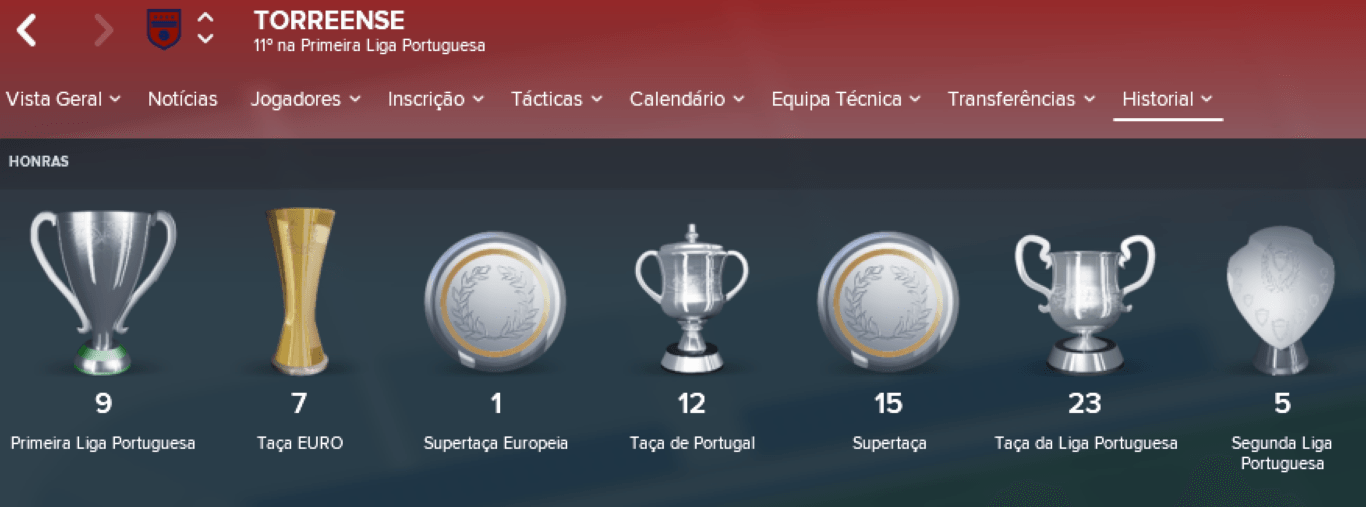
6. Torreense: seven Europa Leagues in 13 finals. Only not higher because they never won the Champions League. Domestically they would easily be 5th.
5. Nacional da Madeira: one Champions League in five finals and five Europa Leagues in 13. Made the most of about two decades to fill the trophy cabinet.
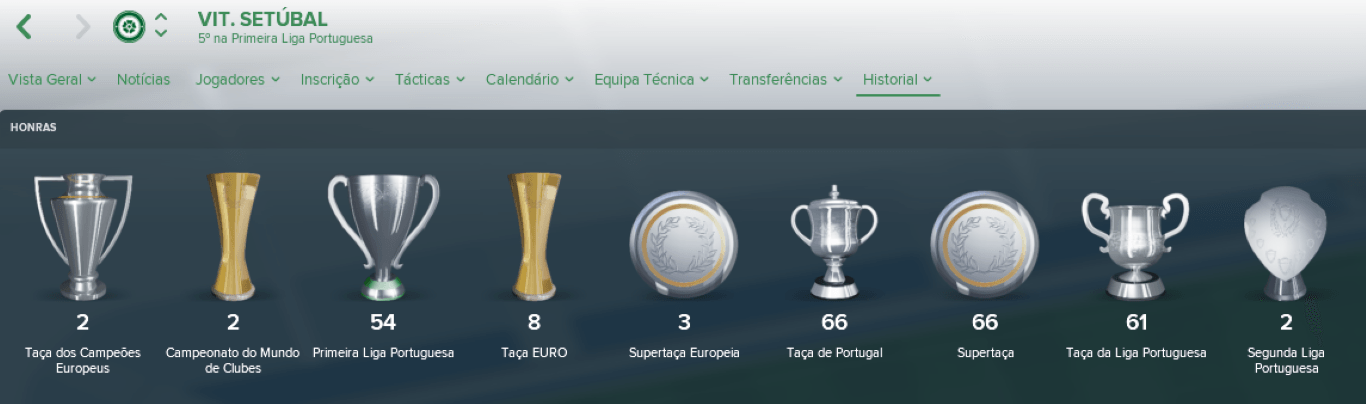
4. Vitória de Setúbal: the first team with big-club numbers: 8 Champions League finals, 25 Europa League finals and 54 league titles.
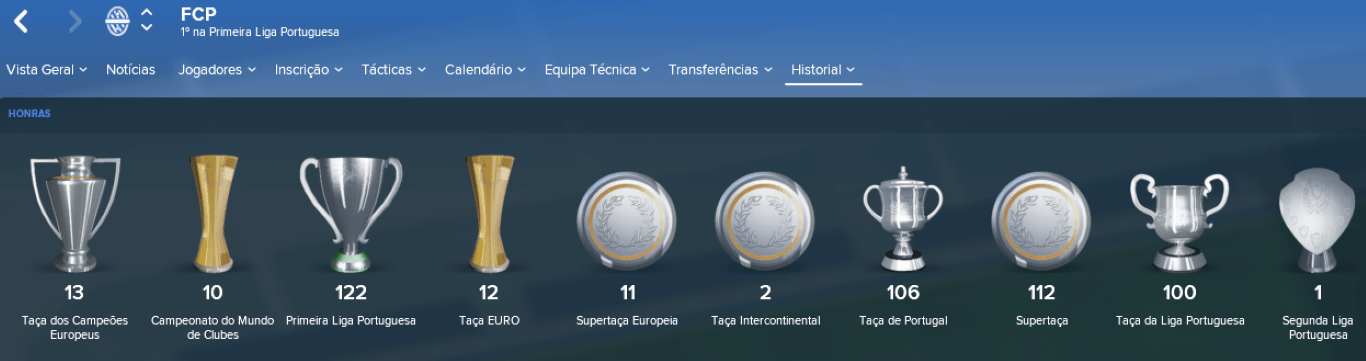
3. FC Porto: abroad they are still by far the second-best Portuguese side, but they have missed the domestic title train. They have 20 Champions League finals and 23 Europa League finals.
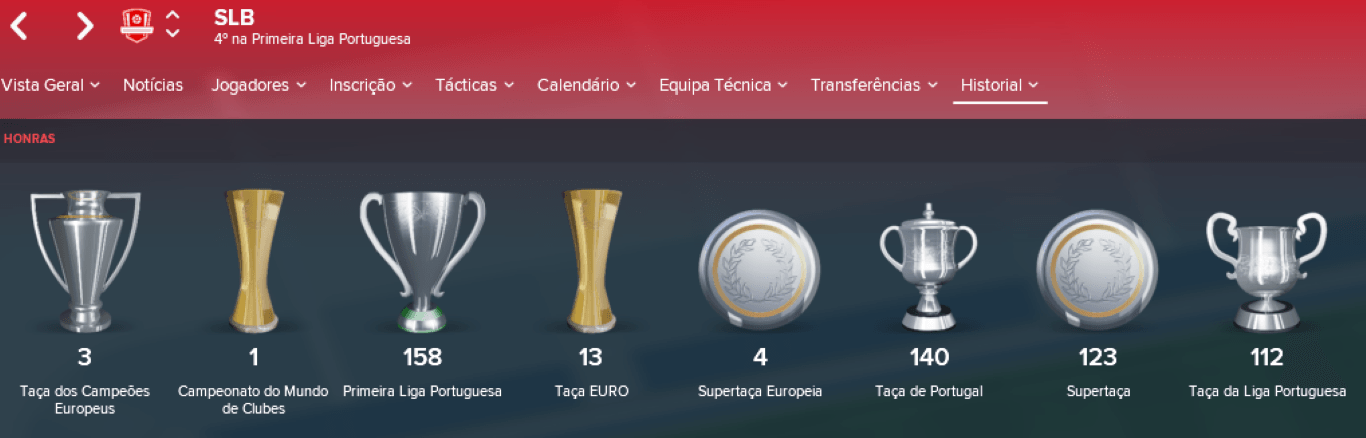
2. Benfica: took advantage of FC Porto’s slump to pull away in titles, but abroad they leave a lot to be desired, with 17 Champions League finals and 37 in the Europa League. Béla Guttmann’s curse is alive and well.
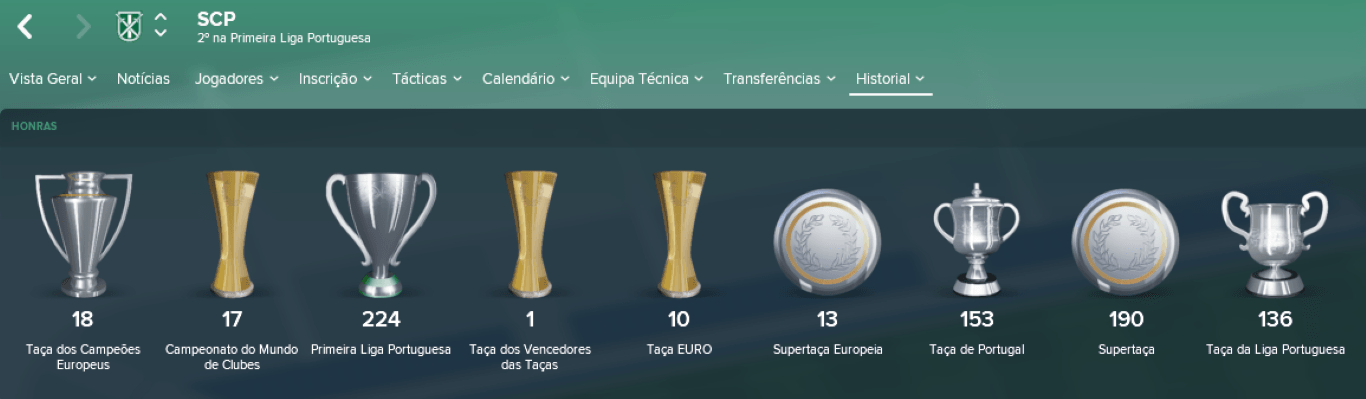
1. Sporting: indisputably the best Portuguese team, and they have already overtaken FC Porto internationally. They are in their best period of the simulation and pulling away, with 36 Champions League finals and 23 in the Europa League.
Want to know how a particular team did? Ask us in the Facebook comments.
Read also