Football Manager 2019 – Interview
Football Manager returns in its 2019 version, with a fresh look, and launches on the 2nd of November.
The long-awaited changes to the training and tactical systems, repeatedly requested by fans of the series, have finally been made and promise to delight the game's enthusiasts.
Entre Linhas sat down with Bruno Gens Luís, one of the coordinators of the Portuguese database.
EL: Good afternoon Bruno, first of all, was it love at first sight between you and Football Manager?
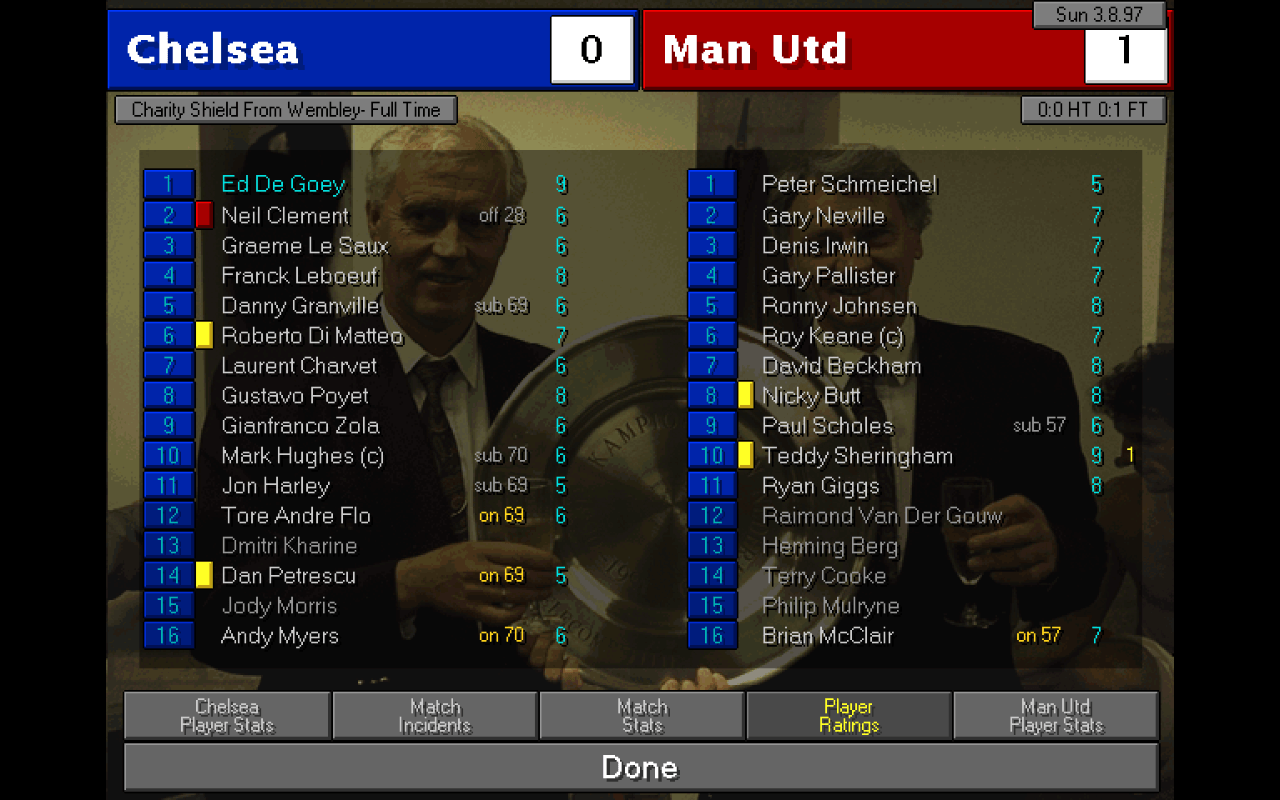
Bruno Gens Luís: Ha ha, good afternoon, thanks for having me. I'm passionate about football and I can say all my childhood memories involve football, whether with family, with friends, or in competition, so it was easy to 'fall in love' once again, this time with good old CM. The first time I came into contact with the game was at some cousins' house, where I spent an afternoon watching them play CM2. From then on, wherever I found a computer (I only got my own at 13 — 1999), I'd install it and spend whole days playing with my friends. I was so obsessive about the game that I'd print out my squads and their stats and take them to school. Obviously nobody cared in the slightest, but I was happy all the same.
Since I was a kid, I initially did the classic cheats, like adding a manager to the rival team and 'smashing' my opponents 49-0. Another habit I had was signing players from Andorra, Luxembourg, Liechtenstein for my teams, maybe out of pity that they were so weak, thinking that if I used them they'd develop, unfortunately back then I didn't know there was a maximum development potential.
As the years went by I matured, stopped cheating and stopped bothering my friends with my achievements.
EL: How did you get into Football Manager (the research side)?
Bruno Gens Luís: I can say I had too much free time… In my last year at university, I had few classes and couldn't find a job, so I spent my free time exploring FM 2013. I was always known for liking to do updates, and I was a bit tired of always seeing the same errors in the game, so I decided to sign up on the forum of Sports Interactive. For about two years, I posted dozens of errors almost daily, until a member of Sports Interactive invited me to join the Portuguese Research team.
He put me in touch with José Chieira, to whom I handed over a word document with around a hundred and fifty pages full of errors, and I immediately started contributing to the team.
EL: How long after that did you take over coordinating the research?
Bruno Gens Luís: I don't quite remember exactly, but somewhere between just over a year and two years. First I coordinated the Campeonato de Portugal, where squads had around 3-4 players each, then I moved on to coordinating the PALOP database, where for example I came across Gelson Dala long before he joined Sporting, and finally, when José Chieira left, I was invited to take over the role alongside Carlos Bessa.
I can say that in about 2 years we went from 8,000 players to 20,000 active in Portugal (nowadays close to 26,000), the Campeonato de Portugal has full squads created (as of the database's cut-off date), and the top district divisions for each football association are also well filled out. All this with around 45 people on average, volunteering their time to build the database, though the team is constantly changing.

EL: But if you're all volunteers, how do you manage to build a database of 26,000 people with above-average reliability?
Bruno Gens Luís: We're all volunteers, but we're doing something we love. Even though we're 45 on average, only 38 take part in each phase, because we respect the 'time off' requests from certain researchers during exam periods, holidays, burnout, etc.
Not all 26,000 are rated, we usually only rate players from the 3 playable tiers, and not every Campeonato de Portugal team has detailed ratings for every player. Unfortunately we can't manage researchers that for every team.
Many candidates for researchers, think all we do is 'scouting', but it's not quite like that.
You need to transfer your knowledge into our software, and that's where we lose about 80% of people interested in helping, mainly because they don't even try to learn how to use the tools. That said, it works as a great filter, since it tells us in advance who would put in the effort to meet tasks and deadlines and who wouldn't.
EL: How do you join your team?
Bruno Gens Luís:: On our site, we have a link for candidates to fill in a form. Anyone applying to scout teams must send in a short report on that team, covering the strengths and weaknesses of the squad's players, within the following 5 business days. Then we run a small test creating a player/manager profile, where, as I mentioned earlier, most candidates give up.
EL: We assume every member of the research team dreams of jumping to a club. Honestly, do you think they'd be ready for that challenge, and should clubs pay more attention to you?
Bruno Gens Luís:: I'd say yes, we all have that goal, but not all of us do 'scouting' scouting work within the team. Some members only do data research without watching matches, and they wouldn't be equipped to join a team's scouting department. That said, with the experience they've built up, they'd be good at information management and even at networking thanks to the contacts made during their tasks. As for the true 'scouts' on the research team, some are better prepared than others, I think most would be an asset, but they'd need some initial training. Scouting for FM isn't the same as scouting for a club.

EL: And what are those differences?
Bruno Gens Luís: Essentially, one has consequences and the other doesn't. In FM you can get it wrong, and yes that might draw some criticism, but there's no real consequence. At club level, if they sign the player you scouted and recommended and he doesn't turn out as expected, not only will the club lose money it could have invested in another player and expected a return on, but your reputation will also take a hit and you can lose credibility. Another big difference is context. In Football Manager, the attributes are just what they are. In real life, when scouting a player, you need to filter for players who fit a specific profile the manager wants, and then observe how they behave in specific contexts/adverse situations and at different moments of the match.
A defender might be good playing in a low block and not as good with a high line, whereas in FM there's no way to tell the two apart. That said, FM can be a great complement to scouting, whether for giving leads on who to scout, or for giving a final validation of our own scouting.
EL: Despite those differences, there are managers and even people in scouting scouting departments who use FM to help sign players….
Bruno Gens Luís: Yes, it's true, I don't think it's the best approach, because FM's rating shouldn't be the deciding factor in signing a player, but rather, as I said before, just a complement. I wouldn't do it myself, but I admit I'd use it to filter down targets.

EL: Coming back to the Portuguese research team. Do you travel a lot? How many matches does each of you watch on average?
Bruno Gens Luís: It depends not just on the availability of the researcher, but also on the number of teams the researchers wants to scout. Since it's voluntary work, each researcher usually only has one team. We don't want to overload anyone, nor have them spending too much on tickets and travel. Some have more than one team, usually teams close to where the researcher. In my case, I travel around the whole country except the islands, not just to watch senior matches across the various tiers, but youth football too.
EL: Just for FM?
Bruno Gens Luís: Ha ha, I'm dedicated, but not to the point of putting my finances at risk. I do it professionally, for clubs and scoutingscouting companies, but when I'm not working with any of those, I still like going to watch matches and take notes, I do it instinctively now and out of genuine enjoyment, obviously I don't take as many long trips during those periods.
EL: If we asked you for a list of the best players in the Campeonato de Portugal, could you….
Bruno Gens Luís: It's a thankless task, I could put together several line-ups full of hugely talented players. So, without calling them the best in the competition, but rather some who've caught my eye in recent seasons, here's a selection, even though some of them aren't even regular starters for their teams.

EL: And what about youth football in Portugal?
Bruno Gens Luís: I'll leave that for you to explore in Football Manager
EL: But can you name some players to watch in the Portuguese League in this FM2019 edition?
Bruno Gens Luís: Outside the 'big clubs', I really like Stephen Eustáquio, Chiquinho, Nikola Maras, Palocevic, Nakajima, Tiago Silva, Bebeto, Lucas Áfrico, Osama Rashid among others, but as I said before, they're not necessarily the ones I'd consider the best.
EL: Sticking with FM2019, what's new in this edition?
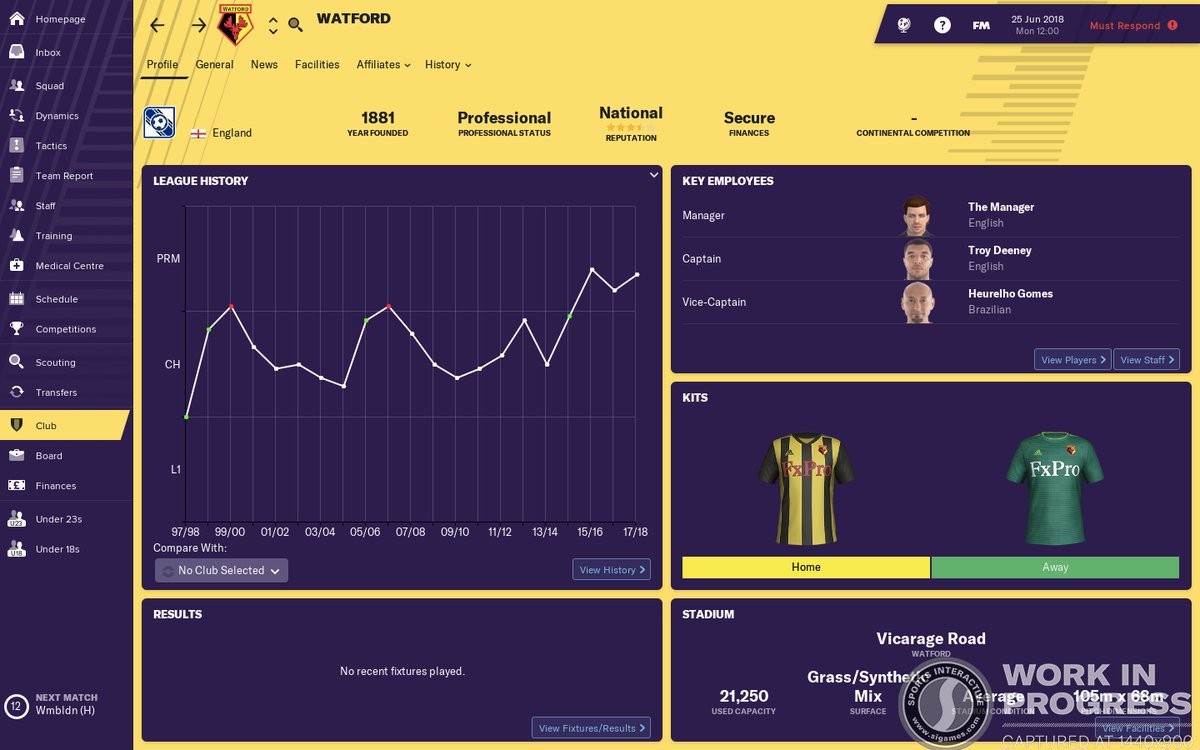
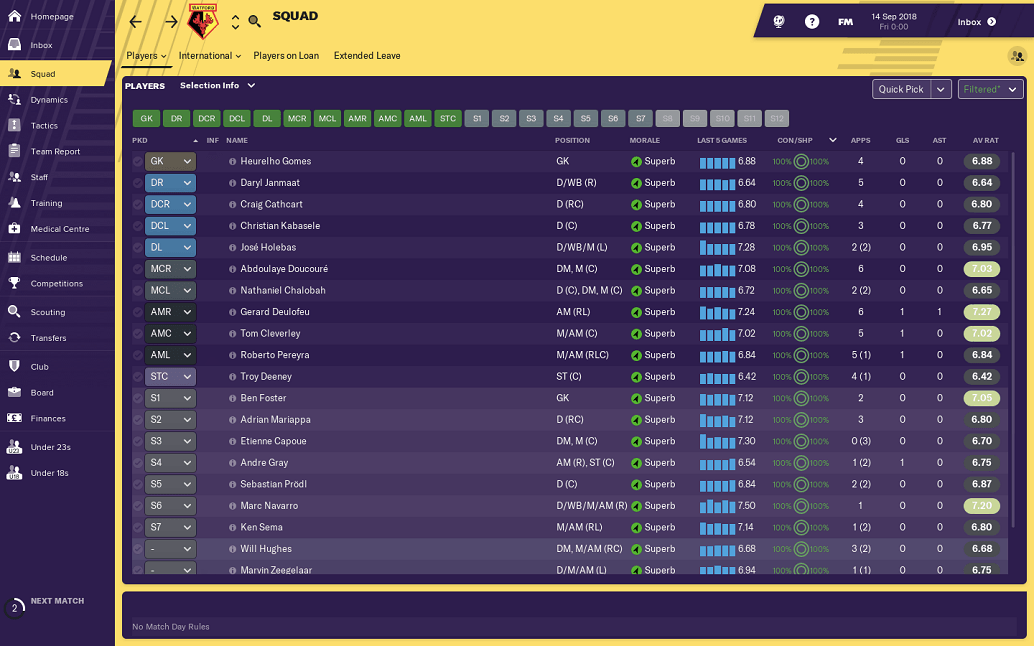
Bruno Gens Luís: Besides the fresh graphics, the training and tactics modules got the long-awaited overhaul that fans of the series have been asking for for years.
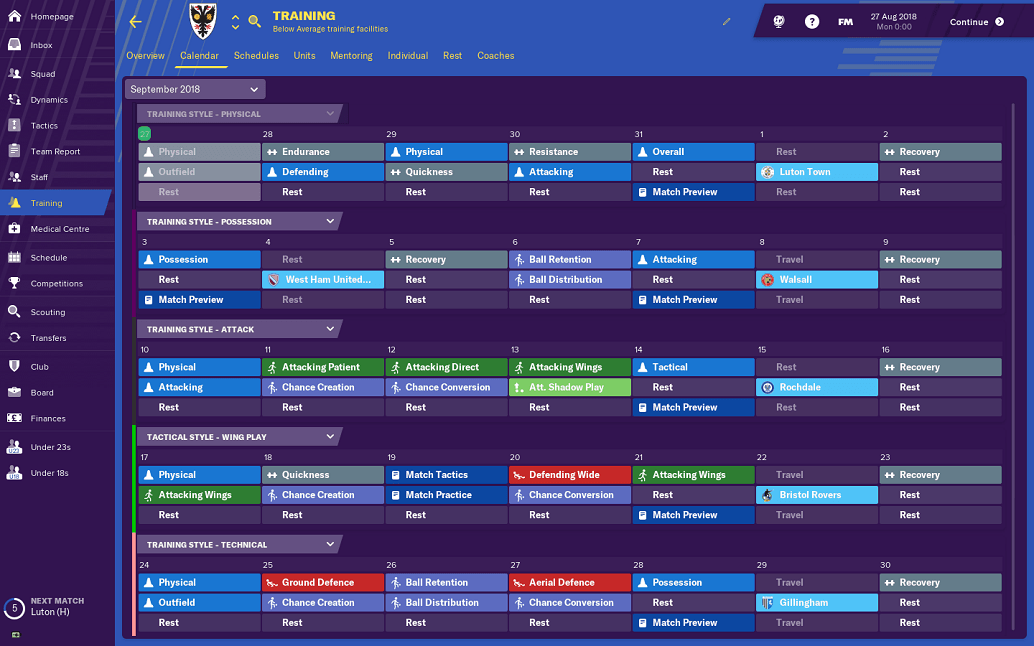
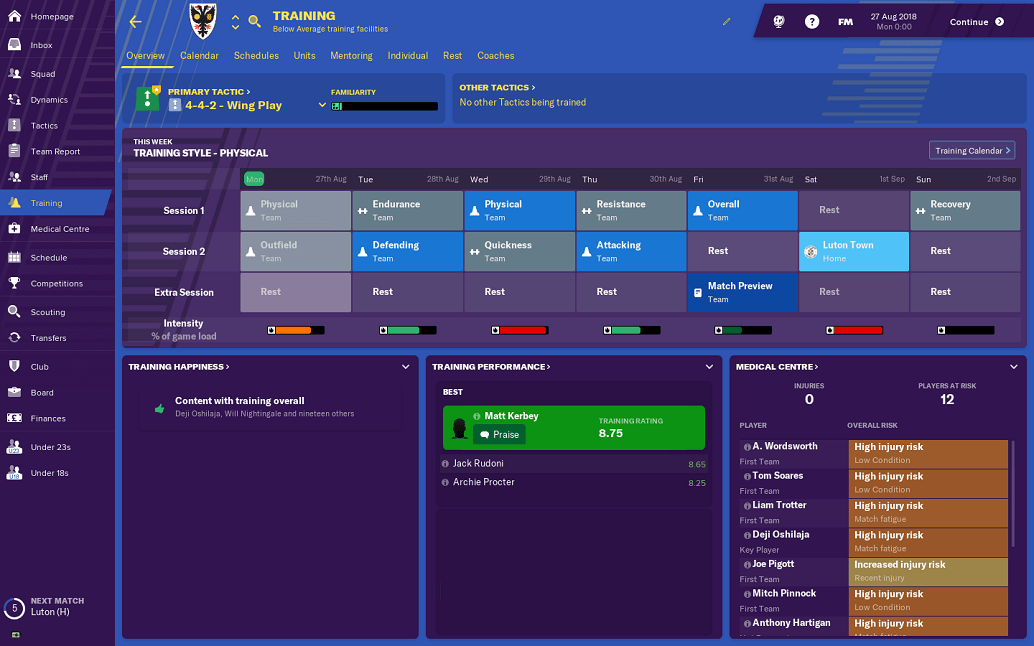
Training will be split into three daily sessions, with 10 training areas available to choose from in each, and within those areas, various types of drills.
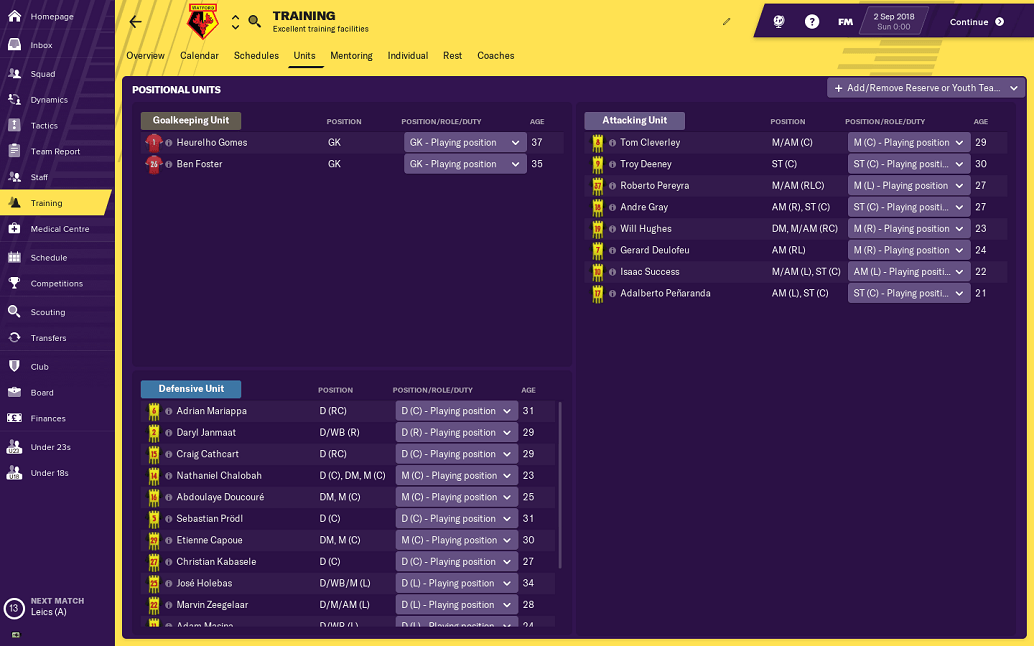
The squad will now be split into training units, with each group having its own focus.
Basically, there will now be weekly micro-cycles, where you can choose to train based on the opponent's characteristics, either to exploit their weaknesses or to strengthen your own team's weaker areas, or plan something long-term and implement a philosophy with its own dynamics.
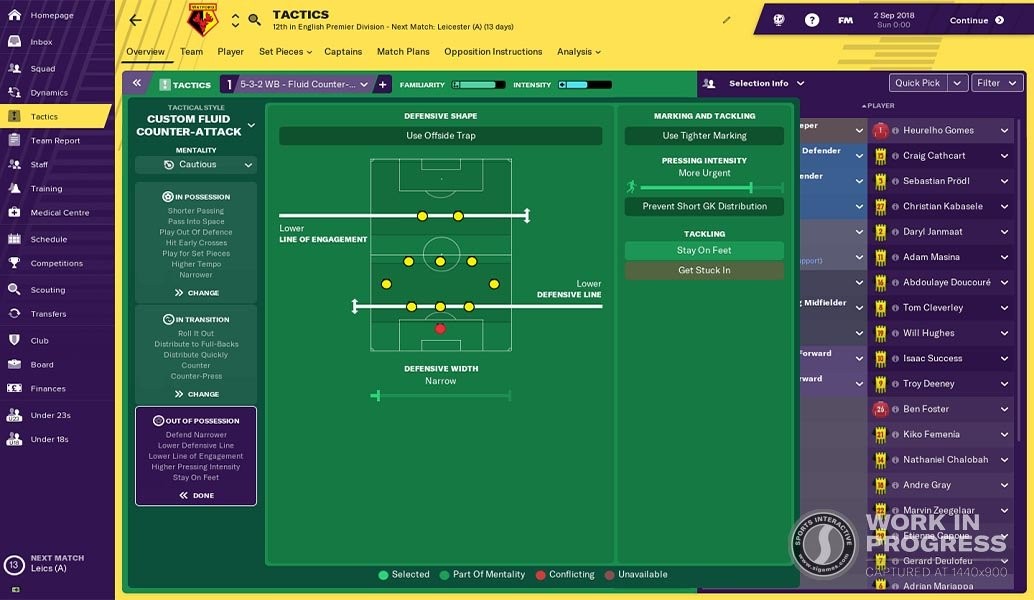
Tactically, there are several preset philosophies such as Tiki-Taka, Gegenpress, Park the Bus or Catenaccio, or we can build our own from scratch — the match engine finally takes into account the 4 moments of the game: attacking and defensive organisation, and attacking and defensive transitions, letting us adjust how we want our team to function in each of them.
New player 'roles' were added, such as pressing forwards or no-nonsense centre-backs.
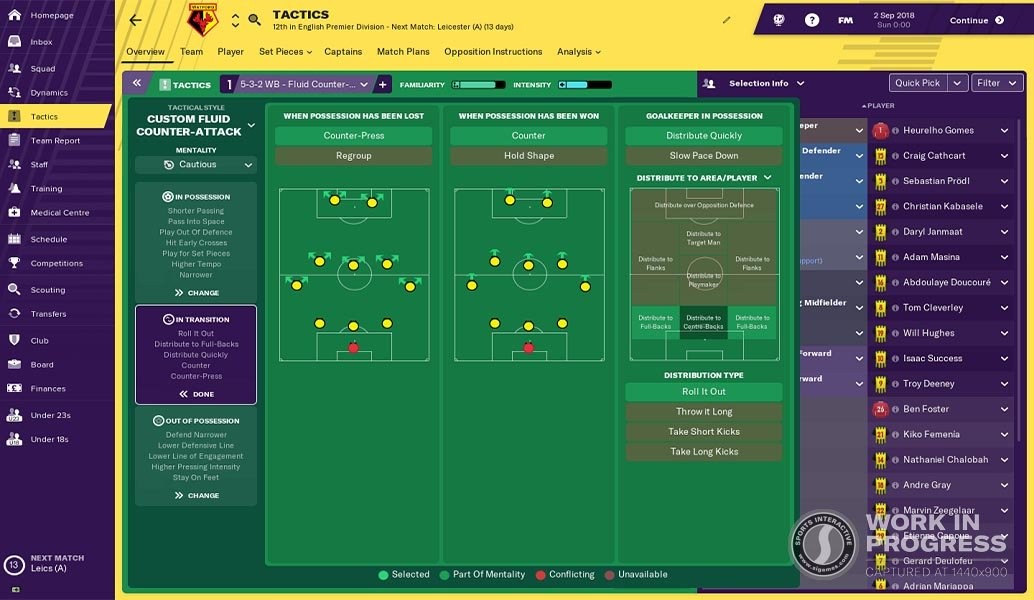
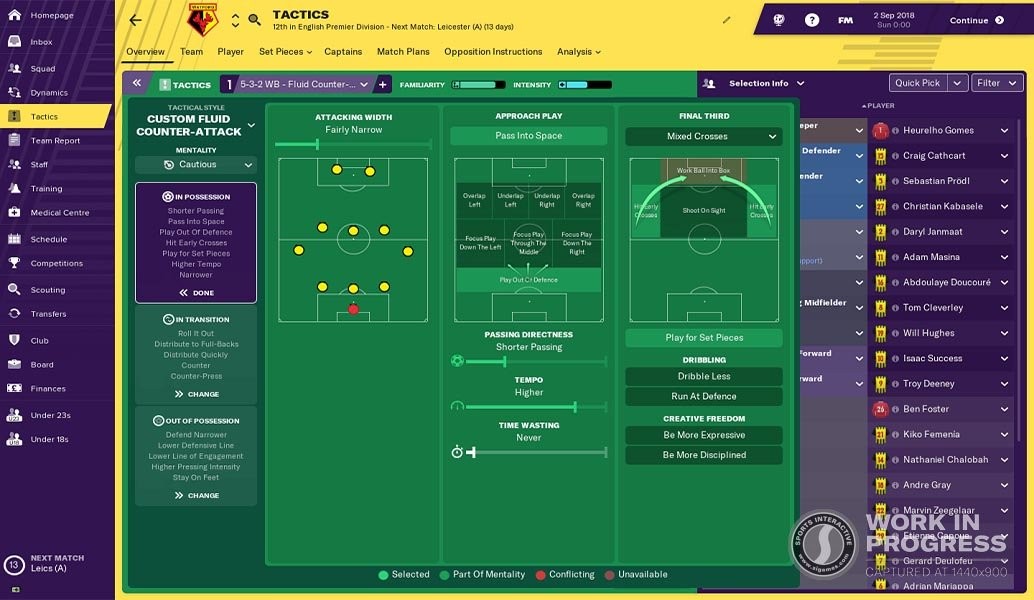
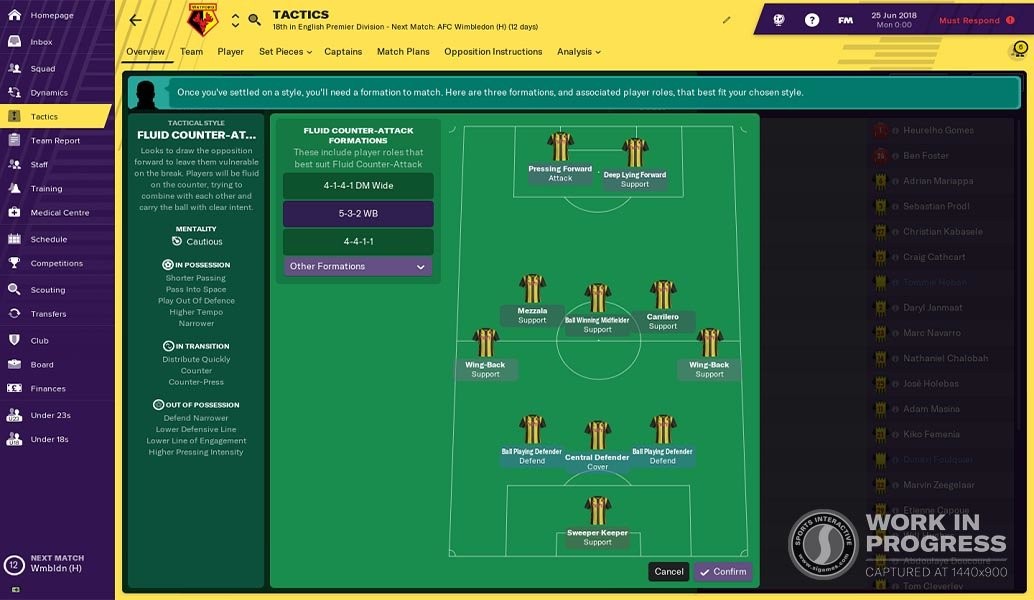
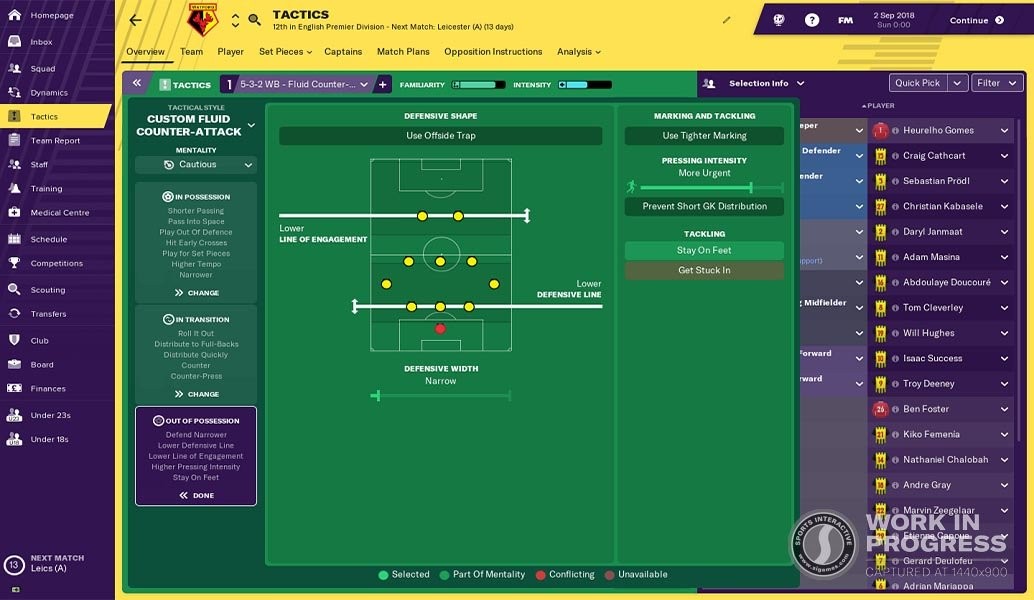
It might seem complex, but to make it easier, Sports Interactive added a system with clear, well-defined instructions on every panel.
VAR and goal-line technology are now in the game, but only in competitions that use them in real life. Their decisions will cause a stir that will carry over into press conferences and social media, both already present in the game.
Lastly, the German league, which will finally be licensed.
https://twitter.com/FootballManager/status/1045282410068418566
EL: I don't know if you can talk about this since it hasn't been publicly announced, but will the Under-23 league be in the game?
Bruno Gens Luís: All I can tell you is that we like to have as much realism as possible…
EL: When will Entre Linhas be in FM?
Bruno Gens Luís: This year, Sports Interactive asked us for a list of Portuguese media outlets to add to FM2019, and EL was one of the names we sent for approval. It probably won't appear in this edition yet, but it's almost certain to be in FM2020.
EL: When does the game come out to the public, and at what price?
Bruno Gens Luís: The game officially releases on November 2nd, though the BETA version will come out in mid-October.
The game will cost €55 in stores and on Steam, but through the Portuguese research website you'll be able to buy it for €32.
You can find us on our Site and Facebook.
Over here, Entre Linhas already has FM2019, and we can guarantee it's going to end a lot of relationships! Ladies, keep an eye on your partners…