It is not always a scout who finds a national team’s next star. Sometimes it is an anonymous Football Manager player, sitting at home.
Discovered in the game, not on the pitch
Phil and James Younghusband were two English brothers in Chelsea’s youth teams, with Filipino heritage on their mother’s side. Around 2005, they appeared in Football Manager as talents available to the Philippines national team, the Azkals, then still a project with no international relevance at all.

It was an anonymous player, never publicly identified, who noticed this in the game and told the Philippine Football Federation that it had two young Chelsea players eligible for the national team. Despite the source being “just a game”, the federation decided to take a chance and contacted the brothers. Both accepted and debuted for the national team in 2006, becoming pioneers of a wave of European-born players wearing the Filipino shirt.
Then came the Germans
The Younghusband case opened the door to an even bigger headhunt. Alfons Schunk, a German married to a Filipina, organized a training camp in Germany to bring together around twenty Bavarian and Bundesliga players with dual Filipino citizenship.
Six of them would go on to wear the Azkals shirt: Stephan Schrock, who became team captain, Kevin Ingreso, John-Patrick Strauss, Patrick Reichelt and brothers Mike and Manuel Ott. They all played professionally for Ceres-Negros, in the Philippines, and quickly became public figures in the country. Schrock remembers the culture shock well: “we were treated like pop stars.” He once told a funny story about the team having to leave a Starbucks through the emergency exit to escape the fans.
Captain, top scorer, all thanks to FM
The brothers’ impact was well documented in the years that followed. James became a dominant box-to-box midfielder, decisive at set pieces. Phil established himself as a striker, became national team captain and is, to this day, the Philippines’ all-time top scorer, with 51 goals. Neither would have got there without that unlikely entry in a video game database.
Together, the two brothers won more than 200 caps and scored 60 goals for the Philippines. And they were not the only ones who helped rebuild the national team: at home, the federation also backed local talents such as Emelio “Chieffy” Caligdong, Ian Araneta and goalkeeper Louie Michael Casas.


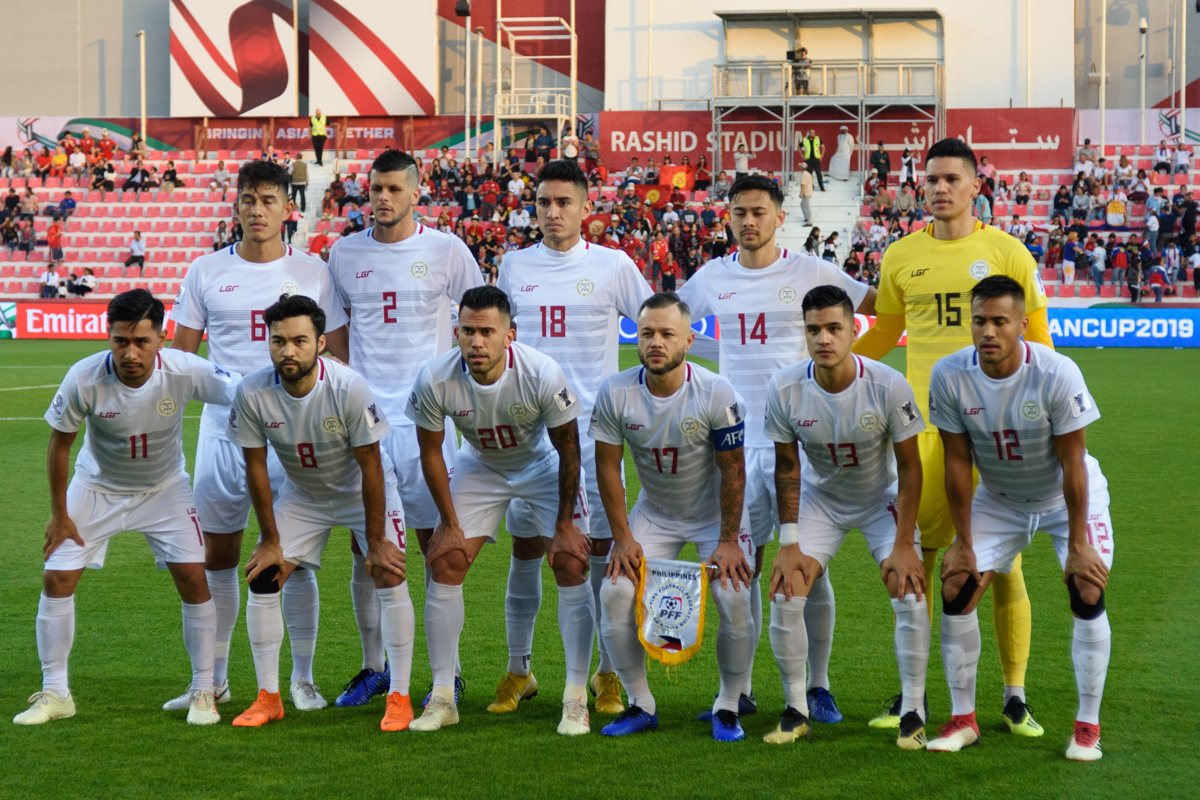
It would take another five years for the national team to achieve its first big result, the semifinals of the 2010 AFF Cup, but the seed had been planted. Two more consecutive semifinal appearances followed (2012 and 2014), as well as a first-ever qualification for the 2019 Asian Cup, backed by the generation of German-Filipino players recruited by Schunk.
Some accused these players of being “hybrids” with an unfair advantage. Schrock answered bluntly: “Either you have Filipino blood or you don’t. We just want to be called Filipinos.”
Read also